




 VK.com
 Telegram
 Gab
Gab
 Brighteon
 BitChute


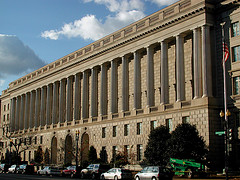
Taxation Sites
 |
 |
| Internal Revenue Service (IRS) | New Jersey Division of Taxation |
Yes, everyone is required to pay their taxes (see Romans 13:6-7 & Matthew 22:17-22 ).If you want to lower your taxes, then lobby your Congressman, vote for someone else or try to reduce your taxes through legal means--there are many IRS and State (you live in) approved deductions and tax credits. Many people are either unaware of or do not take advantage of the many exemptions, deductions, credits, etc. consistent with the tax code.
Tax filing for 2017 -- Trumps Executive Order on Obamacare Leads to a Big Tax Change
Link List of Taxation & Other Government Sites
 |
 |
 |
Federal Taxation and Social Security and Identity Theft websites
- The Internal Revenue Service (IRS)
- Social Security Administration--sign up online.
- Tax Foundation—Find out what the Tax Rates are in your State.
- Federal Trade Commission--identity theft
- USA.gov—an official government site about many programs offered.
New Jersey Taxation, Unclaimed Property & Starting Corporations & Register a Corporate Name

- NJ Division of Taxation—file Sales Tax, Employer Reports, print tax forms, etc on the web & For reporting Tax Fraud in NJ, contact NJ Treasury (Office of Criminal Investigation, Special Agent).
- The Division of Taxation also enforces the New Jersey Cigarette Tax Act and New Jersey Criminal Code through the Office of Criminal Investigation (OCI). The OCI 's Special Agents (who are part of the Division of Taxation) just arrested 100 people (08/14/2015) for contraband cigarettes, counterfeit tax stamps, etc. See State Treasury Agents seize $5 million in smuggled tobacco products.
- NJ WebFile/file online--click "File, Pay Online" Icon.
- Sales Tax Rates for Multiple States--just download.
- NJ Government Employee Identification Number Inquiry System
- NJ Dept. of the Treasury (Unclaimed Property Administration) -- click “Unclaimed Property” icon. (Every U.S. state, District of Columbia, Puerto Rico, the U.S. Virgin Islands, Quebec, British Columbia and Alberta in Canada have unclaimed property programs—unclaimed property laws have been around from the 1940’s, but are more enforced in the last 15 years.)
- Missing Money–free search for unclaimed property (endorsed by the states).
- Affliliated Computer Systems of Dallas (ACS), which was purchased by Xerox for 6.4 Billion dollars in 2010, is involved in Foreign Contracts in addition to U.S. Contracts (ACS was started in 1988 and became public in 1995). According to Infowars, ACS is a contractor for one outsource firm, Immigration and Naturalization Service (INS). ACS managed the INS Student Processing Center in London, Kentucky. On March 11, 2002, ACS granted INS visa approval forms for Mohammed Atta and Marwan al Shehhl for the Venice, Florida flight school, Huffman Aviation. Of course, Mohammad Atta and Marwan al Shehhl allegedly flew planes into the World Trade Center on September 11, 2001. See articles entitled U.S. Visas Contine to Be Handed By Foreign Contractors (12/15/15); Foreign contractors are also involved in skimming from U.S. visa fees & Xerox, ACS close $6.4B merger deal (2010). ACS is a contractor for many government agencies (State and Federal), including the Dept. of the Treasury (Unclaimed Property Administration in NJ), in addition to offering services to major corporations in all States, especially if the State has an Unclaimed Property unit. The Unclaimed Property Administration in NJ was under the NJ Division of Taxation until 2011.
- Dept. of the Treasury (Division of Purchase and Property) -- the division approves contracts for the Executive Branch of government in New Jersey that includes everything under the Dept. of the Treasury. It is perplexing that contracts are being awared to entities where the State of New Jersey already has State auditors in said companies conducting an on-going audit.
- PA/NJ Reciprocal Income Tax Agreement.
- Keane--a private contractor for unclaimed property and other services.
- NJ Division of Revenue—Form a Corporation or LLC, Register a Corporate name, dissolve cancel a business, etc.
- NJ Bulk Sales—If purchasing a Business, check if there are taxes owed (call 609-292-6604).
Pennsylvania Taxation and Revenue, Starting Corporations and Unclaimed Property websites
- PA Department of Revenue—File returns, make payments, etc.
- Pennsylvania (Dept. of the State)--starting corporations, businesses, etc.
- Pennsylvania Department of Revenue
- The Pennsylvania Treasury Department--unclaimed property, investments, etc.
- Incorporating in Delaware vs. Nevada vs. Wyoming
New Jersey Housing, Insurance, Mortgage, Energy websites, Unemployment Insurance
- NJ Department of Insurance Banking
- NJ Housing & Mortgage Finance Agency
- NJ Housing Resource Center
- NJ Clean Energy Program--get up to 70% rebates on installed costs.
- NJ Department of the Treasury
- NJ Department of Commerce—Licensing and Certification.
- NJ Department of Labor—Employer questions.
- NJ Division of Unemployment Insurance
Pennsylvania Housing, Insurance, Mortgage, Engery websites
- PA Housing Finance Agency (PHFA)
- Insurance Department/Common Wealth of Pennsylvania
- PA Department of Banking
- PA Dept. of Community & Economic Development
- Office of Energy Technology Deployment (PA)--home energy prog.
Federal Programs, Analysis behind Government Reporting, CAFRs and State-Run Banks
- USA.gov—an official government site about many programs offered.
- Government Grant List—government grants reviewed
- Worldwater; Solar Technologies
- U.S. Department of Energy
- Federal Business Opportunities
- Shadow Government Statistics—Analysis behind Government Reporting.
- Comprehesive Annual Financial Reports (CAFRs)--Walter Burien's analysis of States' (CAFRs) is not know by many elected officials or citizens. CAFRs represent off-budget public money pooled into various investments. For example, Wisconsin's state CAFR is holding onto some $123 billion in assets (2011). Although these monies are "restricted" to the funds that contain them, there is no law that says this is the case--monies are transferred between each fund (intra-fund) all the time. It should be noted that Free Trade agreements such as NAFTA, unfunded mandates from Washington, D.C. and out-sourcing has largely destroyed large revenue sources such as factories. The US government has been giving tax incentives to corporations that ship high-paying American jobs overseas. This has created the current problem in the states--private sector employees moving into government service jobs while leaving others out of work or forced into low paying jobs. The politicians and corporate leaders will have to answer to the true God of the Bible and His wrath will be great.
- CAFR--$600B fund can't fund $27B pension in CA?
- North Dakota Economic prosperity tied to State-Run Bank---with unemployment in North Dakota under 3.3 percent (2011) and property taxes and income taxes reduced by $400 million, what is their secret? North Dakota has a state-owned bank. The Bank of North Dakota (BND) does not compete with private banks, but provides liquidity and capital. BND has provided 95 financial institutions with $318 million in secured and unsecured funds. North Dakota has contributed $300 million in revenue to the state coffers in the last decade--it deposits its tax revenue into its own state-owned bank. As a result, North Dakota has made 19 percent return on its investments.
Pensions
- National Association of State Pension Administrators (NASRA)
- Large Pension Funds Adjusting their Targets Downward (2016)
Pensions in the Private Sector and What Happened?

According to Employee-Benefit Research Institute , 26.3 million private-sector workers (45 percent of all private-sector workers) in 1970 were covered by a pension plan. Only 22 percent of private-sector workers in 2011 were offered traditional pension plans according to the Bureau of Labor Statistics. Defined Benefit Plans (Pensions) has declined from 42 percent in (1989-90) to 22 percent in 2011.
The 1991 Soviet Union collapse caused socialist India and communist China to open their economies. This resulted, with the help of Wall Street and large retailers, in American corporations to offshore the production of goods and services for their domestic markets. American workers were no longer employed to manufacture goods they consume and the corporate executives earned performance bonuses that resulted in replacing American workers with cheap foreign labor because the shareholders wanted short term profits. This initially affected blue collar workers, but then it affected white collar workers such as software engineers. The distribution of income has worsened--the mega-rich capturing most of the gains and middle class being dismanteled (an offense to Yahweh).
Financial deregulation did not help either. It began with former President Clinton who promoted greed and debt leverage that was carried forward by former President George W. Bush. To quote Dr. Paul Craig Roberts, father of Reaganomics and former head policy at the Department of Treasury, in his article entitled Americans' Economic Prospects And Civil Liberties have Been Stolen (03/25/13), "Boooksley Born, head of the federal Commdity Futures Trading Commission, was prevented from regulating over-the-counter derivates by the chairman of the Federal Reserve, the Secretary of the Treasury, and the chairman of the Securities and Exchange Commission. The financial stability of the workd was sacrificed to the idealogy of these three stooges that "markets are self-regulating." Insurance companies sold credit default swaps against junk financial instruments without establishing reserves, and financial institutions leveraged every dollar of equity with $30 dollars of debt."
What happened? The Federal Reserve had provided $16 trillion in secret loans to bail out American and foreign banks. The mega-rich got bailed out while millions of American families were forced out of their homes. Because of the offshoring of jobs, which is not free trade by the way and free trade itself is found by the lastest research in trade theory to be wrong, this has prevented Obama's most expansionary monetary and fiscal policies in the history of the United States to fail--no real unemployment rate reduction. (Obama is a corporatist.) This nation needs to repent towards God (if this nation wants to promote homosexuality, abortion, fornication, adultery, stealing, lying, gay adoption, not teaching your children right from wrong, reject parents' rights and the Father as Head of the household, anti-second amendment laws, etc., then do not expect the Annointed One to bless this nation) and maybe He will stop the oppressors in the White House, Congress and the ruling elite.
Social Security and Medicare
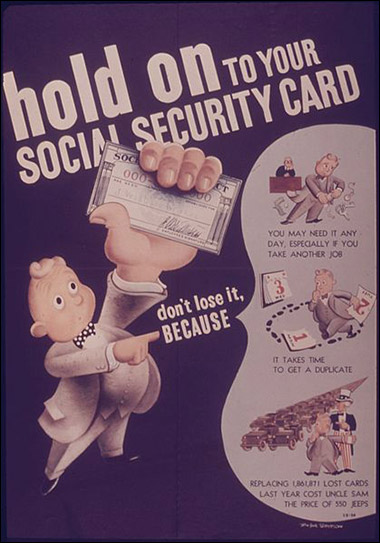
Source: Wikimedia Commons
Outsourcing or job offshoring has serious repreccusions for Social Security (SSN) and Medicare--the elimination of our manufacturing base has not only destroyed this country and the middle class, but will put a terrible strain on SSN and the tax base. The U.S. has the worst safety net of any developed country. SSN and Medicare are funded by a payroll tax--the combined tax is 15.3%. SSN has built up a surplus of over $2 trillion in the past quarter century with Medicare recently running in the red. The Left-wing and Right-wing Republicans have been brainwashed with incorrect beliefs about SSN and Medicare. The Right-wing thinks that the 15.3% tax is an "unfunded liability" and "Ponzi scheme." Well, what about military pensions, veterans benefits and federal pensions that are financed by the income tax? The Left-wing thinks because the SSN payroll tax is capped at $110,000, the rich are not paying enough payroll taxes. However, the benefits are capped and SSN is not a pension for the rich--the poor do get more than higer income earners proportionally. There is no cap on income on the Medicare portion of the tax. SSN and Medicare protect individuals from incompetent money managers or their own mismanagement and protect many hard working citizens that cannot provide for their livelihood and medical care. The Bible is the final word with regard to any postion including a safety net (ancient Israel had a Third Tithe every 3rd and 6th year during the 7 year Shemittah cycle to help the poor--see Deutornomy 14:28-29 as a principle for Christians & all governments around the world), not the Constitution. Man will be judged by the Messiah based on His Word, the Bible. Although I respect and cherish and will defend our great Constitution, the Supreme Ruler of the Universe supercedes it and everything else--remember God ordains governments and He is the one that sets parameters regarding their authority of what they can and cannot do--see the Politcs/Voting Tab for further information on States' authority per Supreme Ruler of the Universe.(Donald Trump wants to make sure SSN is solvent and wants to protect it.) See American R.I.P. by Paul Craig Roberts for further details on this subject.