





 VK.com
 Telegram
 Gab
Gab
 Brighteon
 BitChute









Local Government
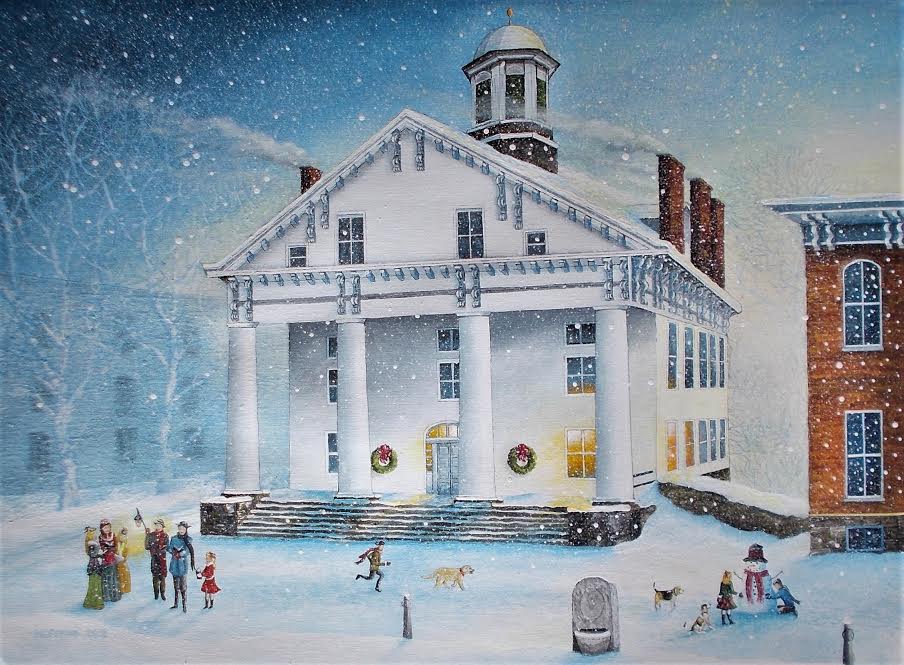
Painting left: Hunterdon County Courthouse by Paul Hoffman (copyright © Paul Hoffman 01/01/2018), a life long resident of Flemington whose family heritage of German and Lutheran religion goes back many centuries. Facebook: Paul Hoffman San Ramon, Costa Rica. Paul Hoffman Wildlife and Realist Artist and Instagram: Paul Hoffman 3902 and GAB: Gab.com/ hoffmanpaul_7761
(The historic Lindbergh trial was held in 1935 at the Old Hunterdon County Courthouse located in Flemington, New Jersey. Charles Lindbergh become famous when he made his historic 33- hour transatlantic flight with the Spirit of St. Louis from New York to France in 1927.)
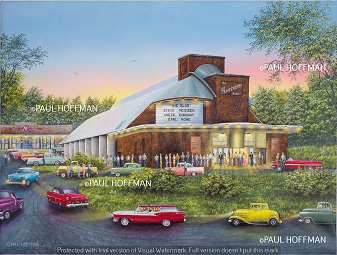
Painting left: The Hunterdon Theater in 1959 by Paul Hoffman (copyright © Paul Hoffman). Facebook at Paul Hoffman Wildlife and Realist Artist and Instagram: Paul Hoffman 3902 and GAB: Gab.com/ hoffmanpaul_7761
Historical background
There is now strong evidence that Mr. Bruno Richard Hauptmann was innocent. (Mr. Hauptmann was a German immigrant who was a Christian and wrote a beautiful letter before his excution--here is a partial quote of his letter: "Soon I will be at home with my Lord....I am at peace with God. I repeat. I protest my innocense of the crime for which I was convicted....The love of Christ has filled my soul and I am happy in Him.") NJ State Police Superintendent H. Norman Schwarzkopt, a political appointee, who's only criminal justice experience before this position was as a department store floorwalker. J. Edgar Hoover offered the resources of the BI (now the FBI) and he refused--he also refused local assistance. Recommended book entitled The Lindbergh Baby Kidnap Conspiracy by Professor Alan Marlis--available only from the McNally Jackson Bookstore in New York City. The professor taught at City University of New York for 35 years and believes James P. Warburg was behind the kidnapping. He was a prominant banker and member of Franklin D. Roosevelt's "brain trust".
Warbug commented in front of the Senate subcommittee in 1950 and stated we would have a world government "by conquest or consent". He was the son of the Federal Reserve architect Paul Warburg. Lindbergh opposed the Federal Reserve Act and was leader of America First Committee. There was a blood feud between the Lindberghs and Warburgs since 1913. (See The New American , April 23, 2012 article entitled The Lindbergh Baby Kidnapping Mystery, pages 32-39 and Lindberghkidnap.proboards.com )
Introduction to Local Government
(Click 15 Important Topics to go to the topics below & then "click" to go directly to the specific topic--to locate State government offices and State agencies, Cities, Local governments & Federal Government websites, go to The Official State, County & City Government Website Locator)

Image credit: Artist: Martino Altomonte (1657-1745). Election Diet in 1697 (Election of Augustus II). Public Domain
In the 16th-18th Centuries Kings of Poland were elected by the Nobility in the fields outside Warsaw--Aristocracy (small privileged few rule) is doing well on a local and State level in NJ--see (Topics Covered #7 below: How Agenda 21 is being Implemented on a Local Government Level?).
How local government works (see Topics Covered 1. below) and what citizens can do to reduce property taxes (that includes school taxes--see the bill sponsored by Senator Mike Doherty entitled Fair School Funding below) and eliminate the out of control cost of township police departments. Townships who want to keep their police department, but would like to lower the high cost of it's police department can do this by using their County Sheriff (a Constitutional Officer) on a contractual basis to supplement their Twp. Police Department. So a township police department could be reduced in size thru attrition and then contract out with the Sheriff's Office for any supplemental officers needed. Essex County Sheriff's Office has a Reserve Deputy program (the Reserve Deputies donate 20 hours a month) to supplement Twp. Police Departments when needed and to keep their own costs lower. The Twp. Police Departments are very pleased with the help they receive from the Essex County Sheriff's Office.
Note: The COANJ includes all Constitutional Officers in NJ : Constitutional Officers Association of New Jersey (COANJ).
History of Sheriff's Office
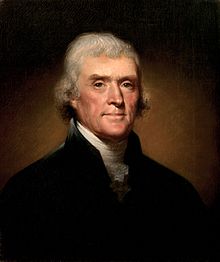

Thomas Jefferson, 3rd President of United States (03/04/1801 -- 03/04/1809)--image by Rembrant Peale (1800)
President Thomas Jefferson state in his work entitled "The Values of the Constitution" called the Sheriff's Office "the most important of all executive offices of the country. The Sheriff's power and authority are from the people who elect him. The citzens should control the office of Sheriff."
(It should be noted that President Thomas Jefferson included bold anti-slavery language in the original Declaration of Independence, which was removed. He did get passed by Congress in 1807 a bill outlawing the importation of slaves--it took effect in 1808.)
The Sheriff can be traced back not only to the Magna Carta (1215), but to the Book of Daniel 3:2--King Nebuchadnezzar II (634--562 BC) was reigning. The Sheriff was brought over to North America around 1634 and President Thomas Jefferson (1801-1809) called the office of the Sheriff "the most important of all executive offices of the country." [See Sheriff David Gee of the Florida Hillsborough County Sheriff's Office established in 1845 (HCSO has over 4,000 employees that consists of 2,022 Deputy Sheriffs and Corrections and 1,375 civilians) for further details. It should be noted that Mr. Joseph M. Demarest, Jr., former Assistant Director in charge of the FBI's New York Division, was employed as a Deputy Sheriff for the Hillsborough County Sheriff's Office ].
Police Consolidation in NJ and PA? Do not Merge Twp. Police Departments


Police Consolidation: The End of Local Law Enforcement--merging Twp. Police Depts. has been a budgetary disaster and will set the stage for the creation of local police departments becoming an outpost of the federal law-enforcement agency such as the DHS & the use of Public-Private Partnerships (PPPs) is another bad idea (see above article)---this is not the case with the Sheriff's Office (an elected Constitutional Office). Note: Police State: Growth Rate of Cops Exceeds Population
Any planned police Mergers should only be done thru the Sheriff's Office
This is why any mergers planned should only be done thru the Sheriff's Office. [The Sheriff's salary is set by NJ Statute ($107,250); however, the Freeholders are at liberty to give a higher salary to the Sheriff, but many Sheriffs in NJ still make a lower salary than most of the Twp. Chiefs of Police and the Sheriffs' have jurisdiction in the whole county], thus it will always be a lower cost operation, especially since most Sheriffs' Offices are civil service, and citizens will keep their direct control and local sovereignty (many high ranking NJ State Police support merging thru the Sheriff's Office)--any county police force such as Bergen County and Union County (duplication of services) should be merged into the Sheriff's Office; see Senator Gerald Cardinale submits bill to merge Bergen County Police, with Sheriff's Department.) The Bergen County Freeholders Freeholders who voted yes for the merger should be complimented, but County Executive Kathleen Donovan (who is either misinformed or intimidated by the county police) should be ashamed of herself for any opposition in merging the county police force into the Bergen County Sheriff's Office--an existing county law enforcement office that has one of the top forensic labs in the State.
Note: NJIAT representatives have spoken to many retired high ranking New Jersey State Troopers and former or current Sheriffs who agree that the local police departments should be either merged or at least supplemented by the county Sheriff's Office, an existing county police force. It should also be noted that former county Judge Thomas J. Beetel of Flemington, NJ (who served in World War II in Naval Intelligence--China) proposed having the Sheriff’s Office patrol the county and former Mayor Andrew Leon of Delaware Township, NJ (who served in World War II as a Navy Seabee—Guam and Bikini Atoll) was against starting a township police department.
The NJ Clinton (actual location is in Perryville) State Police Barracks has one Lieutenant to oversee over 30 New Jersey State Troopers; Kingwood Township the NJ State Police patrol the area because Kingwood Township has no township police department and is considerably less costly that having their own police department. (Under an agreement with the State years ago, the township does not have to pay for their service, but it would still be considerably lower in cost if they had to pay for the NJ State Police service compared to having their own police departmen. So, if a township uses the NJ State Police, keep using their services--if you need to supplement them, contract out with the Sheriff's Office).
Bergen County Merges County Police into the Bergen County Sheriff's Office in 2015
New Bergen County Executive Signs Deal Merging Bergen County Police Dept. Into the Bergen County Sheriff's Department (01/01/15) & Bergen County begins Merger of its Police Force into the Sheriff's Office on NJ.com --We would like to congratulate Bergen County Executive James Tedesco for merging the Bergen County Police Dept. into the Sheriff's Office, which is an existing county police Dept. (this was duplication of services). Bergen County Executive James Tedesco did the right thing. We also would like to congratulate Sheriff Michael Saudino for agreeing with this merger and his hard work to make it happen. The Sheriff's Office has some of the most qualified people in the nation--former Assistant Director of the FBI New York Office was a former Deputy Sheriff.
A "Civil Rights" issue and "Duplication of Services" issue (Camden County and Union County Police should be under the Sheriff's Office and should follow the example of Essex County and Bergen County in NJ)
This is also a "Civil Rights" issue. Citizens, especially African-Americans in Camden County, where disenfranchised by not only the "duplication of services" with setting up a county police force and not using an existing county police force called the Sheriff's Office, but being denied having someone elected with direct accountability to them by using the Sheriff, who they can vote for--call the Camden County Sheriff's Office and Union County Sheriff's Office and the Freeholders to demand that they merge into the Sheriff's Office. The Freeholders disgraced themselves--shared services and duplication of services is a joke.
According to the Express-Times, Police salaries Top Town's List
The Express-Times article entitled Police salaries top town's list dated 04/13/14 stated that 23 of the 27 Phillipsburg employees who make over $102,553 work in the police dept. Employee salaries and wages account for 40% of the muncipal budget according to Chief Financial Officer Robert Merlo. How to solve the problem? Contract out Sheriff's Officers and reduce the Twp. police dept. by attrition--the Sheriff's Office would be supplementing the department to save money. And have the Hunterdon County Sheriff's Office start a Deputy Reserve Program like Essex County Sheriff's Office--the Sheriff Deputies donate 20 hours of law enforcement per month. Deputy Sheriff's Officers are fully PTC certified officers with over 700 hours training.
Also, DPS in Hunterdon County has to be put under the Hunterdon County Sheriff's Office. If the Sheriff and Freeholders are unwilling to do this, they should resign immediately. Do not merge township police departments.
Note: Merger talks in Raritan Twp. and Flemington-Boro; it would have to merge the police departments into the Sheriff's Office in order to save any money for the residents. The school system is already consolidated (saved very little money) and is the largest tax item on residents' property bill.
Qualifications for Different Types of Law Enforcement or Titles in NJ
The Sheriff's Office in Hunterdon County can offer more services to the residents in the county if the DPS and the Park System were be put under Sheriff's Office (the County Park Rangers in Hunterdon County are not law enforcement per se or have very limited law enforcement authority (the required NJ PTC training is 5 weeks ( approx. 175 hours) for County Park Rangers -- Sheriff's Officers and Municipal Police Officers in NJ (790 hours), Correction Officers 14-week training (approx. 500 hours), Class II Specials (600 hours) and Class I Specials (80 hours). The Hunterdon County Park Rangers do not carry guns (they should be approved to carry firearms by the Hunterdon County Freeholders), but wear bullet proof vests. The Park Rangers should further their training at the police academy and become part of the Sheriff's Office like Essex County Sheriff's Office--this is a serious public safety issue. State Park Rangers are law enforcement.
Misinformation about Twp. Police Mergers in Somerset County, NJ
Misinformation about Twp. Police mergers in Somerset County, NJ exposed: Say "NO" to Somerset Merging 19 Twp. Police Departments or any other County in NJ unless it is thru the Sheriff's Office-PDF & Clarification and Fact Sheet on County Police for Elected Officials in NJ & PA (03/11/13)--PDF & Police Mergers thru the Sheriff's Office (Print both Flyers above on Both Sides)--PDF. The Somerset Freeholders and Prosecutor owe Somerset an apology for promoting this stupid plan.
What can Citizens do Locally?
Implementing the above will save millions in property taxes. The John Birch chapter in Flemington meets monthly at The Old Egg Auction located at 84 Park Avenue, Flemington, NJ in order to discuss these important issues, not playing the phony game of conservatism vs. liberalism. Is the position Godly? Is the position Constitutional? Is it exploiting the poor and wage earner? Is it destroying the middle class? (remember the recent layoffs of low paying Hunterdon County Court custodians by the Freeholders?) Laws oppressing the poor and widows? These are the things that will be discussed. Email: huntconservativeforum@gmail.com
15 Important Topics Listed Below:
1. How State and Local government works; see under Sub-heading The Current Redistricting (2011--2021) of New Jersey State Senate and Assembly was done through Secrecy and in Violation of the New Jersey State Constitution: New Jersey has 40 legislative districts, which elects two Assembly members and one Senator
2. Why the Sheriff’s Office Should "Supplement" or "Replace" existing Township Police Departments (and read about the secret meeting the police chiefs had in 2010 to try to discredit the report entitled: Contracting out Services of the Hunterdon County Sheriff's Office (2010)--PDF and Citizen Claims Misinformation being Disseminated regarding shared services and the Sheriff's Office.
3. What can the Hunterdon County Freeholders do to reduce the cost of Twp. Police Departments through Shared Services using the Sheriff's Office?
a. What about the Department of Public Safety (DPS) being under the Sheriff's Office?
b. And a response to some of our elected officials underlying presupposition that they should not consolidate the Department of Public Safety (DPS) into Sheriff's Office because the Sheriff is elected and therefore we might get a bad Sheriff is illogical--should the Freeholders not be elected because we might get a bad Freeholder?
c. It should be noted that the Warren County Freeholders put the Corrections facility under the direct control of the Warren County Sheriff's Office in 2011. Most Sheriffs' Offices run DPS--the DPS will probably be put under the Warren County Sheriff too., Freeholder John Lanza already told a Repubican party member that Hunterdon County is the only county in NJ that does not have the county jail under the Sheriff's Office and it should be under the Sheriff's Office--thumbs up for Freeholder John Lanza--the Sheriff's Office does control the jail now.) d. The Freeholders are duplicating services and it is contrary to the shared services philosophy. Most Sheriffs' Offices in NJ have the DPS under their umbrella such as the Passaic County Sheriff's Office in New Jersey. Also, some of the Park systems are under the Sheriff's Office such as the Essex County Sheriff's Office in New Jersey.e. What has to be done for Twp. Police Mergers into the Sheriff's Office to take place in Hunterdon County? One obstacle has already been removed that makes it easier to merge Twp. Police departments into the Sheriff's Office or just supplement the twp. police departments--that is, the step program (automatic raises after so many years of service--this has nothing to do with what contract they negotiate or pay raises); it was approved by the appeals court on June 5, 2012. All counties do this in order to keep their Officers and prevent high turnover. All local twp. police depts. have a step program.
4. Somerset County Freeholders Misleading the Public about Twp. Police Mergers--the proposed merger of 21 Twp. police departments in Somerset County into a county police force with precincts (that was covered in the Sunday Courier News dated April 15, 2012) is a terrible plan and should be done through the Sheriff's Office, which is an already existing county police force. (The Somerset County Prosecutor, Assemblyman Jack Ciattarelli, NJ 16th district & Freeholder Rob Walton, Hunterdon County should be ashamed of themselves for promoting this--click County Police vs. Elected Sheriff--PDF .) A. An unknown citizen/group is protesting this proposed Somerset Police merger to be voted on August 2012 and is handing out a flyer titled Say "NO" to Somerset or any other NJ County Merging 19 Twp. Police Departments-PDF; 5A. Historical Background on Appointed Judges and Prosecutors in NJ and Why Pennsylvania's System of Electing Judges and Prosecutors is a Better System --Also, read about Convicted felon George Soros, who has an international Arrest Warrant out for him issued by President Vladimir Putin of Russia on Jan. 24, 2012, trying to change the PA's law to abolish elected judges for his own personal benefit through front groups.
5. Fair School Funding proposal by Senator Mike Doherty (23rd District) would reduce property taxes by thousands of dollars per househould if passed by the New Jersey Legislature and signed by the Governor located at www.fairschoolfunding.com.;-- Raritan Twp. /Flemington Borough is getting only $5,611,128/$48,603,208 (12 cents for every dollar sent to Trenton) for school funding; under the FSF plan, they would get $21,522,459 back and all of Hunterdon County would get an increase of about $130 million. See video of Senator Mike Doherty's swearing in at the Capitol building in NJ on 11/23/09. And How to run for School Board Elections and counter the wicked, anti-God agenda of the LGBTQ curriculm. See Arise NJ and also see New Jersey Federation of Republican Women.
6. Lebanon Borough rejects county wide school system discussed at several Mayors' meetings hosted by Rob Walton (2010) and sends letter to Hunterdon County Freeholders & Municipal and School Budgets--Where does Most of the Money go to on your Tax Bill? Also, see a chart with a Budget Breakdown of a Typical Township (Raritan Twp.) and how consolidating all schools in the county will most likely not result in any change in your property tax bill;
7. How is Agenda 21 being implemented on a local government level?--the UN's Agenda 21 is being implemented by Non-governmental organizations (NGO's) with a political agenda and go by such names as Sustainable Developement, Smart Growth, Historic Preservation, Open Space, etc. [it is enforced by non-elected boards and is a blueprint to turn you community into a little Soviet Union (today's Russia is actually giving their citizens more freedoms and rights and the U.S. is taken them away from its citizens)---see American Policy Center.] Also, read about what some of the fascists on Readington Township Committee tried to do to the Solberg Airport, located at 39 Thor Solberg Road, Whitehouse Station, NJ 08889, through eminent domain (see www.solbergairport.com).
8. Open Space and Farm Land Preservation a scam, especially in Raritan Twp.--taxpayer funds given to the politically connected that includes a current office holder in Raritan Twp. and the land cannot even be used by the citizens. Mr. Charles Crown (who passed away in 2008 and served in the Army in Vietnam and was an employee of Raritan Twp. Road Department in Flemington, NJ) wrote a letter on May 27, 1998 that made allegations about a land purchase by Raritan Twp. from Renay Solomon and Erich Development, Inc.--see Letter from Mr. Charles Crown (May 27, 1998)--PDF . [Marcia Karrow was the Mayor of Raritan Twp. in 1998 and campaigned for Committeman Tom Antosiewicz and Committeman Oliver Elbert--see Flyer for 09/13/08 Campaign Fund Raiser for Tom Antosiewicz & Oliver Elbert and who supported them--PDF). Tom and Oliver also campaigned for Marcia Karrow for the 2009 Republican Primary battle for State Senate and supported an anti-gun resolution on March 2013.]
9. High Cost County Attorneys. Action taken by Freeholder Will Mennen and Tom Borkowski, CPA--Tom Borkowski is running with Freeholder Mennen in 2013 for the Hunterdon County Freeholder seat and has been endorsed by the New Jersey Right to Life_PAC--to save Hunterdon Taxpayers thousands of dollars ($700,000) in legal fees by removing Mr. Guy DeSapio in 2011.A. Also, see former Hunterdon County Attorney Guy DeSapio goes after Mr. Henry Kuhl for the Hunterdon County Republican Chair and gets his Ass slapped. b. And what was former Congressman Dick Zimmer's real political views, who supported Guy DeSapio for the Republican Chair, according to Dr. Murray Sabrin.
10. Hunterdon County Freeholders go After Low Paying Court Custodians;
11. Polytech in Hunterdon County--find out about what happened to former Hunterdon County Freeholder George Muller's 04/10/01 Polytech Yale Property Proposal to acquire the Yale property across from Hunterdon Central High School Field House that would have benefited not only the Hunterdon Central High School students, but the taxpayers--see former Freeholder and Undersheriff George Muller's 1 page PDF report; and
12. 10 Million Dollar Lawsuit Filed on August 8, 2012 by former Sheriff against the Hunterdon County Freeholders and Former Prosecutor because of their Stupidity and Alleged Misconduct. A. Hunterdon County (2013) may have another Lawsuit (a Civil Rights issue) over an alleged illegal 37- page Job Application--this time involving an applicant for a position in the Division of Communications , which is under Department of Public Safety (DPS)--George Wagner is Director of DPS. It is time for the DPS to be under the Sheriff's Office and say goodbye to George Wagner and his Freeholder buddy Rob Walton. Sheriff Fred Brown would not discriminate or mistreat his people underneath him. Read more below by clicking the above (12).
13. Why are our Elected State Representatives in the State of New Jersey, especially the 16th District, Fixiated on Eliminating Tenure for Teachers? How is this going to Save Taxpayers Money or Improve Test Scores? and What can be Done to Improve our Education System? And What about the State's Authority over a Citizen or our Children?
14. Why many Holocaust Survivors Accuse Former President Franklin D. Roosevelt as being an anti-semite? Why many Holocaust Survivors accuse Former President Franklin D. Roosevelt as being an anti-semite? & Why Gun Grabbers are Holocaust Deniers & A Few on the Raritan Twp. Committee voted for an Anti-2nd Amendment Resolution that failed. (See testimony from Holocaust Survivor Jack Zaifman at Hunterdon Central High School on 03/26/14.)
15. Raritan Twp. and Security at Hunterdon Central High School & Anti-Second Amendment Voted on at Raritan Twp. and protesters at the Raritan Twp., Flemington, NJ Meeting on 10/01/2019 by the radical left Democrats (God-haters) of Deputy Mayor Lou Reiner (listen to audio) & Interview on Channel 12 News of Lou Reiner about the 2016 Presidential Election
How State and Local Government Works
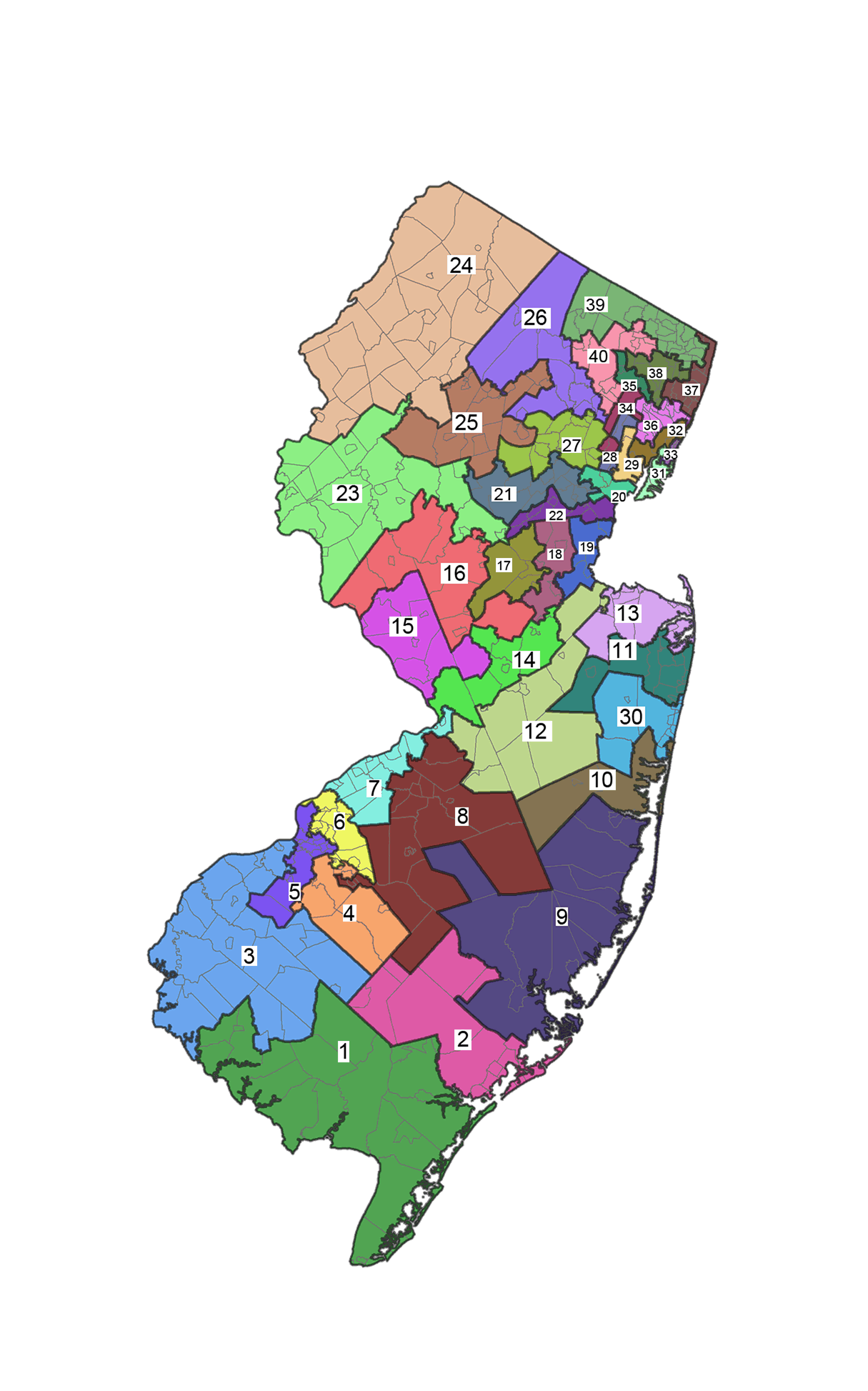
Locate your NJ State District Number by Town (this is not your U.S. Congressional District Number, which is different) NJ Polling District & PA Polling District (find your polling location & State District number in order to vote). Also, see Voting Index for your U.S. Senator & Congressman--Downloadable PDF version and New Jersey Legislative Districts 2022-2030 -- PDF
New Jersey Constitution?
The New Brunswick Massacre of 9/10/47 by Ed Smith -- PDF (New Jersey has the worst State Constitution in the nation. Read article to find out why.)
Note: The New Jersey Apportionment Commission is required by the New Jersey Constitution with redrawing the lines of the State's 40 legislative districts, from which 40 Senators and 80 members of the General Assembly are elected. Unfortunately, the Commission, especially the Republicans according to elected officials, alleged that the whole process was fixed from the beginning under Governor Christie. It was alleged that the 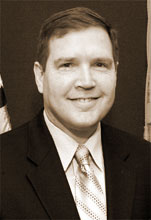 Commission violated the State Constitution on how it divided the counties (Hunterdon and Warren Counties were one district; the 23rd before 2012)--the districts are suppose to reflect the counties as close as possible (see Article IV of the NJ Constitution regarding State Redistricting of the Senate and Assembly -- PDF); Senator Mike Doherty (Picture right, 23rd District) spoke about what happened with the NJ redistricting at the VFW event in Glenn Garnder on 05/02/19 and handed out Article IV. The Commission broke the two counties up to include a few districts--the Republican plan was even worse then the Deomcrat plan and was a violation of the State Constitution. The Republicans on the Commission under former Governor Chris Christie did not want the Conservative, Constitutionalist and Libertarian areas to have any power and thus struck a deal with the Democrats---they would approve the Democrat State plan that was less harmful then the Republicans' redistricting plan under former Governor Christie!. It was also alleged that Governor Christie did everything in his power to keep Democratic Senator Brian P. Stack (D) in the 33rd District's seat safe. (The whole process was secret.) It appears that former Governor Christie never wanted the Republicans to win the Assembly or Senate. The approval the Republican Congressional Districts' plan (another Commission for Federal offices) was another joke.
It should be mentioned that many of the real Conservatives/Constitutionalists/Libertarians (with an underlying Biblical Worldview) want to: 1. Protect the poor and middle class citizens and do not like any of their rights being violated (especially in the black community) and at the same time believe in free markets, not so-called "Free-Trade" that ships our jobs overseas or crony capitalism; the current economic system in America is semi-Fascism or Corporatism). 2. Protect our safety net (social security) from greedy Wall Street that want the money from this fund and want our pension funds. 3. Bring back high wage jobs to the United States (Mr. Donald Trump is for this) that have been shipped overseas as a result of the "Free-Trade" agreements such as NAFTA. 4. Support the Sheriff's Office because it is an elected Constitutional Office that protects citizens' Civil Rights and is more efficient (Senator Stephen M. Sweeney (D) and Governor Chris Christie (R) should not have praised the creation of another county police force in Camden County (duplication of services). They should have used the Sheriff's Office--brains. 5. Protect citizens' Second Amendment rights--Dr. Martin Luther King, Jr. was denied a pistol permit by the Democrats and many anti-gun laws are directed against the law-abiding miniority community. 6. The War on Drugs is a joke; Non-violent people being thrown in jail, but the government has no problem allowing the pharmaceutical companies to administer dangerous anti-depressant drugs (all the mass shooters were on some kind of psychotropic drug) and harmful vaccinations (see Whole Health tab for further information). Legalize some of the drugs so the citizens can get their rights back--it is just big money maker for both banks and government (this is not endorsing drug use)--the federal war on drugs is unconstitutional and, 7. The U.S. government should not be funding the terrorist groups or overthrowing countries that are not a threat to us--use that money for the infrastructure and housing (Mr. Donald Trump has been speaking out against our foreign policy--thumbs up for him).
Many real Conservatives/Constitutionalists/Libertarians (sprinkled with a Christian Worldview) are not against unions per se, but just want the corruption on the top stopped and the abuse by a small minority to stop (collecting anywhere from $50,000 to $500,000 in sick time; this is a problem with local Municipal governments (police, school administrators, etc., who do not have a ceiling of $15,000 like the NJ State employees). This website thinks that unions are very important in protecting workers. It is unfortunate that both major political parties have sold out in some area and are very Fascist. President Obama signed "Fast Tract" and "TPP" with the help of the Republicans and Democrats -- this will destroy more jobs and our rights. Many African-Americans, White, Hispanic, etc. are upset over our open borders, especially since the United States has 94,513,000 not in the labor force. Yes, that is over 94 million as of 2015. Many Republicans and Democrats are Globlists, Free-Traders and Fascists (don't be fooled by the terms Socialism or Capitalism used by these politicians--what they really mean is Fascism or Corporatism where there is no middle class, but only the very wealthy).
Counties and Districts
There are 21 counties in the State of New Jersey and 40 legislative districts for the State Senate (one State Senator per district) and the Assembly (two Assembly members per district—see map above). These counties together contain 566 municipalities composed of clearly defined territory; 250 boroughs, 52 cities, 15 towns, 245 townships, and 4 villages. A county stands between the state and municipalities and includes a Board of Chosen Freeholders, sheriff, clerk, and surrogate. All are elected officials; however, only the county sheriff, county clerk, and county surrogate are constitutional officers (the county freeholders are not constitutional officers). Also, the county sheriff has great authority under the constitution for protecting citizens’ constitutional rights (see heading entitled Why the Sheriff’s Office Should Replace existing Township Police Departments or at least supplement the twp. police departments). Some counties have an elected county executive, which pertains to counties that were organized under the Optional County Charter Law. The location of the administrative office for the county is referred to as the county seat.
What is the Optional Municipal Charter Law or Faulkner Act (N.J.S.A. § 40:69A-1, et seq.)?
Under the Faulkner Act, it offers four basic plans for New Jersey municipalities:- Mayor-Council: Municipalities can establish three to ten executive departments headed by a director, which is appointed by the mayor;
- Council-Manager: The municipal manager is the chief executive with broad powers, which is appointed by the council who has complete control;
- Small Municipality: This is for municipalities that have a population of 12,000 or less, and the legislative powers are vested in the council with a the mayor presiding over the counsel sessions with a voice and a vote ; and
- Mayor-Council-Administrator: This is largely a borough form of government that has an appointed professional administrator (unlike the three other Faulkner Act plans, the Mayor-Council-Administrator offers no optional variations in structure).
There are two procedures by which the voters of a municipality can adopt one of these plans. The Act provides many choices for communities with a preference for a strong executive and professional management of municipal affairs. Twenty-one percent (21%) of the municipalities in New Jersey, including the six most populous cities --Newark, Jersey City, Camden, Trenton, Paterson and Elizabeth-- all govern under the provisions of the Faulkner Act. More than half of all New Jersey residents reside in municipalities with Faulkner Act charters.
Initiative and referendum
Citizens that reside in municipalities under the Faulkner Act, regardless of the particular form, have the right of Initiative and referendum. Yes, ordinances can be introduced directly by citizens without action by the local governing body such as the Township Committee. In order to exercise this right, a citizen has to prepare a conforming petition signed by 10% of the registered voters who turned out in the last general election in an odd-numbered year (i.e., the most recent General Assembly election). Once the petition is submitted, the local governing body can vote to pass the requested ordinance. If the local governing body refuses, it is then submitted directly to the voters. For example, the citizens of a township decide to merge their twp. police department into the Sheriff's Office (this would be done on a contractual basis between county and township) or want to phase out their township police department over a period of time because of out of control costs (binding arbitration with high percentage increases in salaries when the federal and state economy is in very serious trouble, etc.) and replace it with the Sheriff’s Department (up to 50 to 75% cost savings), a petition would have to be signed by 10% of the registered votes, then the local governing body can pass the requested ordinance. Otherwise the ordinance would go on the ballet for a direct vote of the registered voters in the township. This should only be done if the twp. committee or council refuses to act in the best interest of the people by refusing to merge the twp. police dept. into the Sheriff's Office on a contractual basis or offer supplemental coverage via the Sheriff's Office. Sometimes just voting for new committee people is easier.
The New Jersey State Senate
The New Jersey Senate was established by the New Jersey Legislature in 1844. In 1947 the New Jersey Legislature changed the New Jersey Constitution to allow the term of State Senate office to be four years instead of three years. New Jersey Senators are elected in a “2-4-4” cycle based on the decennial United States Census, which affects the district boundaries. As a result, elections in the Senate seats take place in years ending with a “1”, “3” or “7”.
Vacant legislative seats can be filled with interim appointments by the county committee (each political party has elected county committee members—2 year terms--for each polling district in the township—two persons are elected only by their registered party affiliation; voters such as a registered Republican or a registered Democrat can vote for two persons in their polling district only). The office is on the ballot for the next general election unless the vacancy occurred with 51 days of the election—the appointment would then stand until the following general election. See History of NJ State Senate.
The New Jersey State Senate before 1967 had a more Constitutional Republican form of government modeled after the U.S. Senate (2 U.S. Senators per State regardless of population)
The New Jersey State Senate had 21 representatives, one from each county regardless of the population (this was predicated on the our constitutional Republican form of government—2 U.S. Senators are elected every 6 years regardless of population and the congressional seats are apportioned by population and congressmen/congresswomen are elected every 2 years).
Yes, United States is a constitutional Republic, not a democracy (see Republic vs. Democracy--PDF and The Electorial College: Preserve or Abolish?--PDF). The Founding Fathers believed in a Republic and were against a pure democracy because it would lead to anarchy or totalitarianism. Also, the states with a smaller population would have no say if the number of U.S. Senate seats were determined by the population.
Unfortunately, the wicked Supreme Court of the United States in 1964 (Reynolds v. Sims) decided abolish this form of government in New Jersey—which was based on the federal model—by requiring a “one man, one vote” principle that legislative districts must be approximately equal in size. David Friedland was the person who filed the suit in the New Jersey Supreme Court on behalf of two union leaders, who disgraced themselves by undermining our Republic form of government. The New Jersey Legislature acquiesced to the wicked United States Supreme Court and mandated the changes of “one man, one vote” principle that took effect in 1967. The Governor had the authority under the Constitution to disobey the United States Supreme Court, but chose to instead to be a coward or he did not understand the authority given to State Governors and County Sheriff’s under the United States Constitution.
The Current Redistricting (2011--2021) of New Jersey State Senate and Assembly was done through Secrecy and in Violation of the New Jersey State Constitution: New Jersey has 40 legislative districts, which elects two Assembly members and one Senator
Under the New Jersey Constitution, any county with a population under 225,000 should not be broken up. In other words, it should be one district. The current redistricting splits Hunterdon County into 3 districts, Somerset County into 6 districts and Warren County into 2 districts. The meetings for the redistricting took place in secrecy and Democratic Assemblyman, who served in the military, tried to crash into one of these secret meetings and was forcefully prevented from entering. Both political parties participated in this corruption with the help of Governor Chris Christie. The Republican redistricting plan was worst than the Democrat redistricting plan for libertarian, constitutionalist and conservative areas in the State of New Jersey. It is also hurts the poor people in these areas from getting fair representation. Remember: Martin Luther King, Jr. was a Republican because the KKK represented the Democratic Party in the 1960s. Many Republicans in New Jersey are really secular humanist Democrats with Fascist leanings or Neocons. (See the Politcs/Voting tab for further information on Martin Luther King, Jr.)
What is Senatorial Courtesy?
This allows the State Senator from his/her district to prevent consideration of a local resident nominated by the Governor for a position that requires Senate confirmation. For example, a State Senator from his/her district can block the nomination of a prosecutor or judge temporarily or permanently without any obligation to justify the basis of their actions. [County Prosecutor’s and Judges are appointed whereas in Pennsylvania the District Attorney (the equivalent to our County Prosecutor) and judges are elected by the people—a better system.]
The Pennsylvania State Senate
See Pennsylvania State Senate and History of PA State Senate and Biblical Quotations in the Pennsylvania State Capitol--PDF

Why the Sheriff’s Office Should Supplement or Replace existing Township Police Departments (easier to Supplement)

The Sheriff's Office should be used to offset the costs of local law enforcement duties for the following reasons:
- Because your Sheriff’s Office is the whole county and the Sheriff is a Constitutional Officer, there is much more flexibility.
- For example, if the Hunterdon County Sheriff’s Office took over the policing functions of the Raritan Township Police, the Sheriff’s Office could only assign 15 Sheriff Officers instead of the over 30 now on the force and have a satellite office (the existing police station in the township) in the more populated areas (it is up to the Twp. how many officers they contract out for--the Twp. can keep its Police Dept., but should supplement it because of the out of control costs).
- If there is an emergency, the Sheriff can have the other Sheriff’s Officers in the county respond to the incident. This would not be the case with an existing township police departments—the police dept. is stuck with a huge overhead even during times of little activity.
- The Hunterdon County Sheriff’s Office has civil service, which means the cost of each Sheriff’s Officer is considerably less and there is no age limit—a lot of qualified retired military personnel work for Sheriff’s departments across the country.
- The cost of the townships police departments is out of control—there are many on the township committee who have a cult worship mentality towards the police officers, make back room deals or they are intimidated and give them whatever they want. Also, the police have binding arbitration. For example, a breakdown of the cost of a typical township police department such as Raritan Township Police Department in Hunterdon County in the 2009 approved budget is:
- Salaries and Wages ($3,256,220.00 in 2008)------------------------------$3,325,035.00
- Other Expenses------------------------------------------------------------------------$208,975.00
- Police & Firemen’s Retirement System ($647,406.00 in 2008)----------$441,365.00
- Compensated Absence (value $779,763.00; Approx. $50,000 x .54%)--$27,217.00
- Purchase of Police Equipment--------------------------------------------------------$7,900.00
Total: $4,010,492.00
Raritan Township’s Total Budget: $16,872,575.32
Police Percentage of Budget: 24%
[Note: This percentage does not necessarily account for the true cost of operating a township police department—when the full costs are accounted properly such as pensions, the percentage cost can be anywhere from 30% to 50% of the townships’ budget--2011 budget has seen a doubling in the pension cost for the twp. police dept. to almost a million dollars; see Raritan Twp. in Hunterdon County--go to the Municipal Budgets and Audits tab, click 2011 budget and go to pages 22 and 30. Also, Also, police chiefs should be elected like the Sheriff---you could rename them Marshals. Marshals are the equivalent to a Chief of Police or Police Department Head (see
https://www.hugomarshal.com/about_us/the_marshals). In some states Marshals are Law Enforcement Officers's (LEOs) in very small towns. Do not confuse Marshal with Federal Marshals. See Old West history at https://www.lifeintheoldwest.com/sheriff-or-marshal-how-lawmen-fit-together-in-the-old-west/.] The Sheriff's Office should be over the Twp. police departments, not the prosecutor.
For more details on the Sheriff's Office see Police/Sportsmen and Homeland Security Tab, and article in the Star-Ledger dated 09/19/10 entitled N.J. police salaries rank highest in nation with median pay of $90,672 (the article gives detailed information on each municipal police department in every county in the State of New Jersey; for example, Raritan Twp. Police Department's median income is $90,424 (the chief makes over $130,000), 26% of the officers make over a six figure salary, violent crime index is 0.2%--based on number of offenses per 1,000 residents—and have 31 officers as of 2009; see 2008 Uniform Crime Report).
- The Sheriff is elected Constitutional Officer and not a bureaucrat and is an employee of the people.
- Mistreatment of the citizens by the current township police departments ( the President of NJIAT has been receiving a lot of complaints by the citizens--both old and young and includes police officers in NJ and from other states). Examples of complaints against the twp. police departments include being pulled over with no probable cause, harassment, nasty attitude, etc--see National Police Misconduct Report (NPMR) sponsored by the CATO Institute; this does not imply that the NPMR wants a national or federal police force like Nazi Germany--they called their federal police force the Gestapo. NJIAT supports the Sheriff's Office and local Twp. Police Departments; however, if local twp. police departments' conduct and high cost continues on its present course, the best alternative is the Sheriff's Office because you can elect the Sheriff and the township and people still have autonomy on a local level and it is less expensive--do not create another county police force (a duplication of services) like the Morons in Somerset County are trying to do. It is harder to address complaints by the citizens against Twp. Police Departments because the chief is not an elected officer (who sets the policy and culture for the department and many honorable township police officers have to work under a chief who runs the department like the Gestapo) and most township committee members are cowards or have a vested interest (control) in keeping their high cost police departments. The Sheriff is elected every 3 years and is thus directly accountable to the people.
- The Sheriff has the ability and authority under the Constitution to protect citizens’ liberties against the federal government and state government. Yes, they can disobey a federal law if it is a direct violation of the Constitution and Bill of Rights. Also, the county Sheriff and the Governor are the only state officials who can call out the “militia” (armed law abiding citizens—see I Samuel 25:13 for support of an armed citizenry called to action) or “posse” to support efforts to keep the peace in his/her county. The U.S. Supreme Court ruled on June 27, 1997, that the Brady bill was unconstitutional and that the Federal Government could not commandeer state or county officers for federal bidding—this is a tenth Amendment right. Federal agencies could not do whatever they felt like doing. Justice Scalia wrote for the majority, stating, “The Federal Government may not compel the states to enact or enforce a federal regulatory program.” (See article by Sheriff Mack on the subject.)
- The President of NJIAT has spoken to many high ranking New Jersey State Police Officials about the local township police departments—they concur with me that the township police departments are out of control and should be supplemented or merged into the Sheriff's Office. The townships that are currently patrolled by the State Police (just keep them since you have free service) such as Kingwood Township do not have to pay for the services because they were grandfathered in and have a population under 10,000; of course, the NJ taxpayers are paying for this service. If the citizens of that township had to pay for services, it would still be less expensive than having a township police department; however, the Sheriff’s Office could perform the same function at a lower cost and the Sheriff would be directly accountable to the people in the county. Also, any concealed carry permits should be processed through the Sheriff’s Office—this is what Pennsylvania and many other states do.
- On January 25, 2010, a meeting was held at the East Amwell Municipal building to discuss the possible merger of West Amwell’s, East Amwell’s (which does not have its own police department) and Lambertville’s police department. There was one major problem with the independent study conducted by Blue Shield Consulting of Morristown (Mr. Ted Ehrenburg is owner and one of the main speakers there): The Sheriff’s Office report was not included. An East Amwell resident asked why the option of the Sheriff’s Office was not mentioned and brought to the panels attention that Undersheriff George D. Muller was in the audience and deferred to him. Undersheriff Muller pointed out to Mr. Mike Capobianco, the Hunterdon County shared services coordinator, that they have already discussed the matter in detail and let Mr. Capobianco explain why the Sheriff’s Office report was not included. Mr. Capobianco’s response can be summarized as follows:
- The Sheriff’s Office is the most cost effective method of policing the county and is a 100% behind having the Sheriff’s Office (an already existing county police force) police the county where needed.
- The Hunterdon County Freeholders would not release the advisory report submitted to the Freeholders from the Sheriff’s Office and that is why it was not included in the study.
- It would be very difficult to get the Freeholders accept the Sheriff’s proposal because they do not like the Sheriff
The citizens of the three townships, especially East Amwell, were not happy with the study and thought it was very flawed and offered no guarantee that the residents would save any money. They would probably end up paying more money --West Amwell and East Amwell would have to subsidize Lambertville. East Amwell has free services already from the State Police. The Freeholders might have been given erroneous information by various individuals who have a vested interest in keeping these high cost township police departments and are trying to destroy the Sheriff’s Office. (It should be noted that Undersheriff George D. Muller has administrative expertise as former Freeholder for 18 years has actually generated revenue and saved money for the citizens of Hunterdon County through the Sheriff’s Office in 2008 and 2009 and Undersheriff Muller has given presentations to other townships on the cost effectiveness and efficiency of having the Sheriff’s Office patrol their community and also proposed that the Motor Vehicles contract out the services to the Sheriff’s Office instead of the high cost Township Police Department that did not want it anymore—Hunterdon County would have made a profit on the deal if the Freeholders voted to approve hiring a Sheriff’s Officer because the State of New Jersey would reimburse the county for a set amount and the Sheriff’s Department cost of hiring an officer is much lower then hiring a township police officer. The Freeholders would not approve the hiring a Sheriff’s Officer for Motor Vehicles—the conduct and actions of the Freeholders is not good.)
Hunterdon Central High School should consider a Sheriff’s Officer at the school instead of a Raritan Township Police Officer considering that the Chief is trying to obtain $70k (the real cost would be $100k) from the school for their services—the Sheriff’s Office has jurisdiction in the whole county and the sending districts could split the costs, not just Raritan Township residents if the school was charged for the services. (I am sure if the Sheriff’s Office had a patrolling function in the county, they would not charge the school.)
There seems to be hostility or a misunderstanding towards Constitutional Offices by the Hunterdon County Freeholders—this ought not to be the case. The purpose of the Freeholders is to: 1. Run an efficient county [having the Dept. of Corrections (County Jail), Emergency Services, Homeland Security, Communications, etc. under the Department of Public Safety (DPS) instead of the Sheriff’s Office is not running the county efficiently); 2. Lower the costs to the taxpayers (which is giving the Townships an option on to use the Sheriff’s Office on a contractual basis); and 3. Protecting their Constitutional rights, not how much control they can have. The Prosecutor’s Office is a State Constitutional Office--however, it is not an elected position like Pennsylvania, thus not accountable to the people and the Freeholders have less control of this office then the Sheriff’s Office! It should be noted that the Prosecutor’s Office has to pull individual police officers from different townships throughout the county for their Swat team—the Hunterdon County Sheriff’s Office should have their own Swat team instead of the Prosecutor’s Office, which is much more efficient and effective.
The 2008 Sheriff’s Office Shared Services Report that was purposely kept out of the police merger report done by the Blue Shield Consulting of Morristown is now available and other successful merger reports of twp. police depts. merged into the Sheriff's Office--see Police/Sportsmen Tab & below.
County Police vs. Elected Sheriff--PDF
Contracting out Services of the Hunterdon County Sheriff's Office (2010)--PDF
Hunterdon County Sheriff's Office Shared Services Proposal (2008) for ten municipalities--PDF
Can the County Sheriff Save the Constitution?—PDF
Note: Twps. can still keep their Police Dept.--just supplement! A list of problems in Hunterdon County (NJ) with the Police below: A. The Sheriff's Office will not only save the townships a lot of money (the main issue is cost), but would put and end to the Township Police Departments in Hunterdon County exhibiting unprofessional conduct or criminality; too many Officers are lying because many of the Chiefs tell them to pull over people and look for something--this was alleged by a Flemington resident that a Raritan Twp. Police Officer told him (the source--2010) in ShopRite that they are told by their superiors to pull people over and look for something. This does not imply that a Twp. has to eliminate its police dept.--they can use the Sheriff's Office as a supplement to offset costs. This is how the county can save money for the municipalities by putting the DPS under the Sheriff's Office so they can offer many services. (Note: Don't forget that only 14% (for example, Raritan twp.) of your tax bill is the County share--Hunterdon has a budget of around $88.82 million as of 2013--the majority of your tax bill is from schools and police.)
B. A young lady (who was a Raritan Valley Community College student a few years ago (2005) and is believed to now be working for the NYPD) was dating a Spanish NYPD Police Officer and in the military reserve alleged that every time her boyfriend came to Raritan Twp. (Hunterdon County) to visit her, he would be pulled over by the police with no "probable cause." A lot of the problems stem from the Police Chief. Now the Officers have to ask permission to go to the bathroom or take a lunch or dinner from the chief when they are patrolling--this is off the wall and an abuse of power and the Raritan Twp. council members should put a stop to this conduct.
C. Raritan Twp. Police Dept. should be complimented on their speedy processsing of "Firearms Purchaser ID" cards. The Police Dept. seems to be very pro Second-Amendment.
D. Citizens have also alleged that Flemington Boro Police Dept. does the same thing (pull people over with "no probable cause"), especially too many of the Hunterdon Central High School students. However, Flemington Boro Police Dept. Officers get twice the calls for service than Raritan Twp. Police receive--they are much busier and have to deal with the problem area in Flemington Boro that consists of drug dealers, gangs and illegal immigrants. They are also paid far less than Raritan Twp. Police Dept.--their (Flemington Boro Police) salaries are closer to the Sheriffs' Officers in Hunterdon County. The new council member in Flemington Boro has helped keep the cost down, but was fair to the Officers (starting salary $42,000 instead of $52,000 with a 8-step program instead of a 6-step program with some promotions). However, Police departments such as Flemington Boro having License Platereaders is an evasion of privacy and unconstitutional--see article titled You are being Tracked: ACLU reveals docs of mass Surveillance.
E. A request was made by Flemington Boro Council to the Sheriff's Office. They could use the help from the Sheriff's Office--a request was made to supplement the Dept. by patrolling the problem areas in Flemington Boro. This is what the Sheriff's Office under Fred Brown should be doing. Passaic County Sheriff's Office in New Jersey is an excellent example of a Sheriff's Office in NJ. Under the Bureau of Law Enforcement: Uniformed Patrol, this division also deploys the following specialized units whenever they are needed throughout the county, at no extra cost to taxpayers: Bomb Squad, Crisis Response Team, Emergency Services Unit, Haz-Mat Team, Special Weapons, Scuba Team, Criminal Investigations Division, Narcotics Investigations, Water Resource Protection Unit, Internet Crime Unit, Fugitive Warrant Squad, Crime Scene Unit, Marine Patrol, Public Safety Telecommunications, E-911 Call Center, and Hostage Negotiation. This is why the DPS in Hunterdon County should be under the Sheriff's Office.
F. Clinton Twp. Police have some serious problems (they were taken over by Prosecutor's Office not that many years ago)--there are many alleged complaints from the citizens. A resident of Clinton Twp., who works in Flemington, alleged that the Clinton Twp. Police Dept. is making residents, who apply for a Firearms Purchaser ID card, to sign a waiver if it takes more than 30 days. N.J.S. 2C:58-3(f) states that the application has to be processed within 30 days. The Hunterdon County Prosecutor's Office should investigate and put a stop to this nonsense. See Police/Sportsmen Tab for information on what is happening with the Clinton Twp. Police Department and their behavior.
G. A retired NY & NJ Police Officer and Vietnam Vet, who lives in Hunterdon and wants to remain anonymous, commented that many Twp. Police Officers go around with their "Marine haircuts and Gastpo uniforms" and forgot that their job is "to serve and protect" (see National Police Misconduct Report (NPMR) sponsored by the CATO Institute and Flex Your Rights);
Sheriff Reserve Units and How to have an Effective Program in NJ, PA or any other State
Sheriff Reserve Units are also used throughout the country to save taxpayers thousands of dollars. Examples of Sheriffs' Offices using reserve units:Reserves Unit (West Palm Beach, FL) ,(West Hollywood, CA) and (NJ has a volunteer Deputy program implemented by the Essex County Sheriff's Office). Many of the volunteers in the Sheriff Reserve Units are either retired or active military personnel, police or other professionals who either donate their time or receive pay with no benefits to offset the high cost of law enforcement in their county.
The Director of the of the Deputy Reserve unit should report directly to the Sheriff and the NJ Statutes that authorize unpaid Deputy Sheriffs
The director of the Deputy Reserve unit should report directly to the Sheriff. This will prevent any confusion and other problems and will insure an effective and professional Deputy program. N.J.S. 40A:9-117 (Appointment of unpaid deputy sheriffs) gives the Sheriff the authority to appoint Deputy Sheriffs without compensation. The Sheriff may appoint the lesser of either 85 Deputy Sheriffs or one Deputy Sheriff for every 10,000 in inhabitants of the county according to the lastest federal decennial census. Also, see N.J.S. 40A:9-117.3 (Deputy sheriff: rights, privileges and immunities).
The High Cost of Township Police Departments (especially in New Jersey) and Solutions--see Contracting out Services of the Hunterdon County Sheriff's Office (2010)--PDF summary and other official Sheriff merger reports below as a guideline to use in any township, county or state.
For more details on the Sheriff's Office see Local Government Tab, Homeland Security Tab, and article in the Star-Ledger dated 09/19/10 entitled N.J. police salaries rank highest in nation with median pay of $90,672 (the article gives detailed information on each municipal police department in every county in the State of New Jersey; for example, Raritan Twp. Police Department's median income is $90,424 (the chief makes over $130,000), 26% of the officers make over a six figure salary, violent crime index is 0.2%--based on number of offenses per 1,000 residents—and have 31 officers as of 2009; see 2008 Uniform Crime Report). Also, see a summary prepared by a Hunterdon County resident entitled Contracting out Services of the Hunterdon County Sheriff's Office (2010)—PDF. Other pertinent reports: Hunterdon County Sheriff's Office Shared Services Proposal (2008)—PDF , Clay Police Department's Merger with the Sheriff's Office (Summary of Agreement)-PDF and Hunterdon County Sheriff's Office 2008 budget—see pages 24- 26 with Motor Vehicle Analysis from a former Freeholder.
What can the Hunterdon County Freeholders do to reduce the cost of township police departments through Shared Services using the Sheriff's Office? What about the DPS being under the Sheriff's Office?
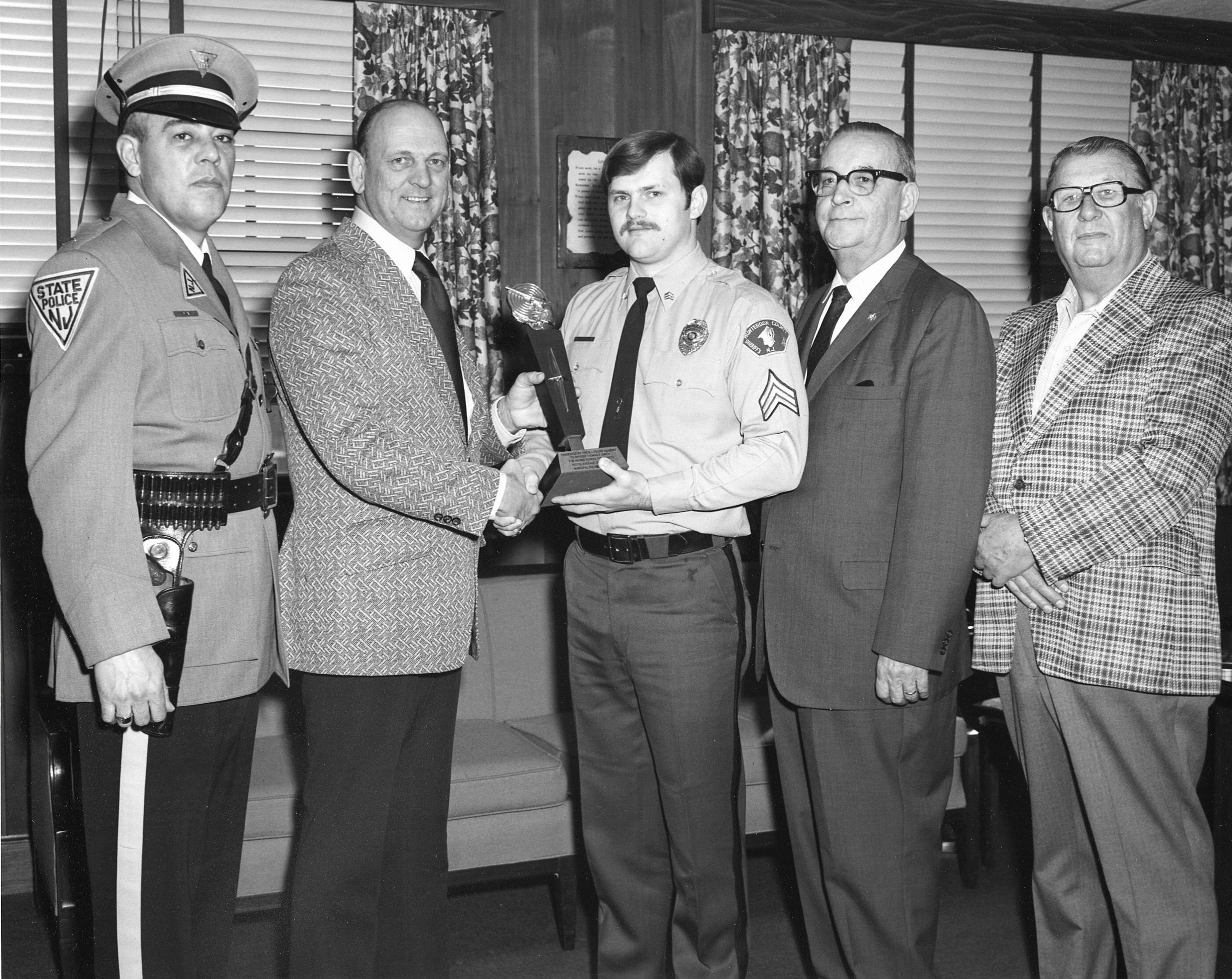
For larger picture, click Sergeant, Hunterdon County Sheriff's Office, 1975--PDF
Sergeant Tom Smith, who was later appointed Undersheriff in the 1980s under Sheriff Warren Peterson, in the Hunterdon County Sheriff's Office in New Jersey receiving a Pistol Award from the Sea Girt Municipal Police Academy in 1975 (the Sergeant also served in the United States Marines in the 1960s--see U.S. Marines picture and U.S. Air Force picture of his brother Richard E. Smith--PDF ); for a larger picture, see Tom Smith (large picture-PDF) & Richard E Smith (large picture-PDF) & Richard and Francis Patrick at the Flemington High School Prom -- PDF. Their father Ellis E. Smith--PDF (who was a 32 degree Mason, graduate of the University of Virginia and considered your top organist player on the East Coast) comes from family with a long history of military service that includes many high ranking officers. Ellis also worked in the financial district--First Investors Corporation--PDF . The Sergeant also worked part-time for the Delaware Twp. Police Dept. (the Twp. was very pleased to have a fully PTC certified Police Officer (not a Special) working for them part-time and saving them a lot of money.) There is a big cost advantage having a fully functional Sheriff's Office. See picture of Delaware Twp. Officer Lee Stell (one of the oldest patrol officers in New Jersey (age 70+) and Sergeant Smith--PDF taken at Frank's Auto Repair in the month of December 2015--Sergeant Smith worked with Officer Stell part-time years ago; Officer Stell retired on December 31, 2015.
(Raritan Twp. could hire a few Sheriff's Officers and have them (with the Sheriff's Car) run up down Rt 202 and Rt 31 on the weekends and Raritan Twp. or Flemington-Boro would not need so many offficers.) The Hunterdon County jail was under the Sheriff's Office in the 1970s. This should be case now--this took place in 2015. Some of the former Hunterdon County Freeholders were not too swift.
Note: The current jail with 1 bed per cell is nearly at full capacity (approx. 56 with maximum of a little over 70--there were two beds put into each cell to double the capacity just in case of an emergency. The Hunterdon County jail was built on an outdated design, which cannot be expanded. Transferring the service to Somerset County Jail (which is under the control of the Somerset County Sheriff) might be appropriate if the current Corrections Officers are transferred into the Hunterdon County Sheriff's Office or transfered to another county correction facility.
The good news is that the Hunterdon County Correctional facility has been put under the control of the Sheriff in 2015 and the prisoners are being transferred to the Somerset County Correction facility. There still has to be a small staff to process prisoners or defendants in the county. Eventually the Sheriff's Officers will go directly to the Municipal Police Stations in Hunterdon County to pick up arrested defendants. School security could now be offerred at a lower cost using the Sheriff's Office (Hunterdon Central High School)? Also, new breatheralyzer machines that might be centrally located for the municipal police departments should be run by the Sheriff's Office, not the Prosecutor's Office. The Prosecutor should be prosecuting, not doing all the law enforcement functions in the county.
The current Raritan Twp. Officer should be removed from Hunterdon Central High School and replaced with a Sheriff's Officer, who has jurisdiction in the whole county. It was alleged that Freeholder John King told a Raritan Twp. Committee person that Hunterdon Central High School should use DPS--however, all the law enforcement personnel (corrections officers) have been put under Sheriff Brown. So, you have to use the Sheriff's Office.
The county Freeholders should be instrumental in promoting the Sheriff’s Office instead of trying to destroy it as is the case in Hunterdon County in NJ. By working with the Sheriff’s Department, the taxpayers on the local level would benefit because the individual townships in the county would have a valid alternative to their high cost police departments. The township committee members would put in a request for so many unit hours (the unit hour cost would include the salary of the Sheriff’s Officer, overtime, and police car to operate in a one hour increment) and any other needs. Also, Communications (9-1-1), the Office of Emergency Management, Homeland Security, County Youth Facility, Office of the County Fire Marshal, Emergency Services Training Center, and the county jail (which was taken away from the Sheriff’s Office in the 1980’s) should be under the Sheriff’s Office—the majority of the county Sheriff’s Departments in NJ have control of their county correctional facility--the correctional facility is now under the Hunterdon County Sheriff's Office).
The Freeholders created in 2005 another bureaucracy called the Hunterdon County Department of Public Safety (DPS) and put the above services under DPS—this would be totally unnecessary if the Sheriff’s Office was running those services. This is not implying that current director of DPS is not doing an excellent job—he should just be under the Sheriff’s Office, which would give DPS a more effective Homeland Security (a local response plan is much more effective with a county Sheriff’s Office, especially having control of the Incident Command System (ICS) and if your township police departments have been replaced by the Sheriff’s Office). Many of the programs that the director of DPS is taking credit for were actually implemented or proposed by former Sheriff Bill Doyle, who was also a retired Lieutenant in the New Jersey State Police.
Former Freeholders George Melick and Will Mennen should have come on board with the consolidation of the DPS into the Sheriff's Office (most of the Sheriffs' Offices around the country, including NJ, run the functions of the DPS)--contact your current Hunterdon County Freeholders such as Matt Holt, John Lanza and Suzanne Legay and tell them you want the DPS under the Sheriff's Office. A few of the Freeholders underlying presupposition to their argument that they should not consolidate DPS into Sheriff's Office because the Sheriff is elected and therefore we might get a bad Sheriff is illogical--should the Freeholders not be elected? Maybe they should be appointed in case they are bad? Who appoints the appointees? What about the bad appointments by Governor Christie such as the recent State Supreme Court nominee Bruce Harris who has contempt for the Biblical definition of marriage between a man and a women (a creation ordinance in Genesis) and the Constitution?
What has to be Done for Mergers of Twp. Police Departments into the Sheriff's Office on an Individual Contractual Basis in Hunterdon County?
(Other townships would not get charged who do not use the Sheriff's Office--it is much easier in other counties because the Sheriff's Office already has a 24/7 operation and are much larger. This is the fault of the Hunterdon County Freeholders in the last 30 years such as Freeholder George Melick, who has been there over 30 years.)
For mergers into the Sheriff's Office, there needs to be at least 3 townships willing to do this in order to set up a 24/7 operation. There is one township and mayor who wants to use the Sheriff's Office--he just needs two more townships to get on board. If anyone is interested, just e-mail this site and we will forward information to a person who has already prepared a summary for using the Sheriff's Office.
One obstacle has been removed that makes it easier to merge with the Sheriff's Office--that is, the step raises (tenure). All counties do this in order to keep their Officers and prevent high turnover. Public Employment Relations Commission rulings indicated all other New Jersey counties give guards and Sheriff’s Officers tenure (step) raises and that those counties have better retention rates. Former Sheriff Bill Doyle (who is also a retired as a Lt. in the New Jersey State Police) fought the Freeholders for years about having a step program. Of course, Freeholders Rob Walton, Will Mennen and George Melick were against it because it actually might save the taxpayers money by allowing mergers to effectively take place through the Sheriff's Office saving townships millions of dollars. The terms of the contract were upheld by the appeals court on June 5, 2012. (See article from Hunterdon Democrat dated June 29, 2012.)
Historical Note on the Hunterdon County jail: The new jail was suppose to be built behind the county library on RT 12—it would have been half the cost then the current location and could have housed temporary non-violent federal offenders, which would have been paid by the federal government. Yes, the county would have made money—the current jail was built on an outdated design that has a tunnel that connects to the court house that floods. Ask your longest serving Freeholder (1978 to present) why he voted this way in the 1980’s along with other Freeholders who are no longer serving). Instead of the Hunterdon County Freeholders destroying the Sheriff’s Department and being petty over items requested such as off-duty badges ($2,000), which was already approved in the budget, they should be saving the taxpayers money on the big items such as eliminating the enormous fees that the county attorney is receiving for his services--$845,286.86 in billing fees to the county in 2008.
If the Freeholders allowed the Sheriff’s Office to place an officer at Motor Vehicles in Flemington, the county would have actually made a profit because the State of New Jersey would reimburse the Sheriff’s Office.
Somerset County Freeholders, Somerset Prosecutor and One Hunterdon County Freeholder Misleading the Public about Twp. Police Mergers
 There was no reason for the Somerset County Freeholders to commission a 2 1/2 year study about mergering or consolidating township police departments. The Freeholders could have had a two week free study from the Sheriff's Office or National Sheriff's Association. Having the Sheriff's Office patrol or supplement townships in Somerset County (Somerset County Sheriff's Office) is the most efficient and cost effective--it is also easier to negotiate police contracts for townships who want to merge into the Sheriff's Office. There is no need for former Somerset County Freeholder Jack Ciattrelli, who is the Assemblyman for the 16th district and an intelligent man, and Hunterdon County Freeholder Rob Walton to promote legislation in New Jersey to authorize or make it easier for municipal police Twp. Departments to merge. This is not the case with the Sheriff's Office, who are already authorized by the state. The municipal police departments are able to legally merge or supplement their departments through the Sheriff's Office. [See Say "NO" to Somerset Merging 19 Twp. Police Departments or any other County in NJ unless it is thru the Sheriff's Office-PDF & Clarification and Fact Sheet on County Police for Elected Officials in NJ & PA (03/11/13)--PDF & Police Mergers thru the Sheriff's Office (Print both Flyers above on Both Sides)--PDF. ]
The proposal for the 21 Twp. Police Departments in Somerset County to merge and then create a county police force is stupid. Somerset County is duplicating services (the Sheriff's Office is an existing county police force where each Twp. can legally merge their police department on a contractual basis into the Sheriff's Office and the other townships who do not merge with the Sheriff's Office do not have to pay for the other townships who do so because it is a contract between the Sheriff, Freeholders and the individual township) and the so-called savings for the 21 Twp. Police merger is a joke because it requires massive layoffs and a county police force is always more costly in the long run--the Sheriff's salary is set by New Jersey Statute and as a result holds the costs down in addition to many other factors. The Somerset Prosecutor should be ashamed of himself because it is about him having control of the force not about protecting the citizens and cost savings to the taxpayers--this was admitted by Assemblyman Jack Ciattrelli to a county committee person in Hunterdon County at a political function; that is, that they have a problem with the Sheriff in control and not the prosecutor. (The county committee person told Jack this is stupid, disgraceful and it should be done through the Sheriff's Office.) The Courier News even admitted that the savings over 10 years keeps getting adjusted down from previous estimates. This is also contrary to what other States are doing--merging Twp. Police Departments into Sheriff's Office. The misleading report can be accessed at (Somerset County Prosecutor's Office Task Force on Regionalized Policing).
The real issue was that the Freeholders do not want to give up control that included the Somerset County Prosecutor. The Sheriff and the County Prosecutor are Constitutional Officers. The difference being is that the Sheriff is elected by the people, thus more accountable to the people whereas the county prosecutor (a State Constitutional Officer) is appointed by the Governor and controlled by the Attorney General--look at the the former Somerset County Prosecutor (Nicholas Bissell) who was indicted on 30 counts of criminal activity by a federal grand jury in 1996; since he was appointed, he could only be removed by the Governor and thus the citizens had a bad prosecutor in Somerset from 1982 through 1996. In Pennsylvania the Prosecutor or District Attorney is elected. They will end up with a high cost county police force and a duplication of services (the Sheriff's Office is an already existing county law enforcement police force). This is stupidity on the highest level.
Contact Sheriff Fred Brown , a straight shooter, about using the Sheriff's Office to reduce police costs to the local municipalities in Hunterdon County--there are false rumors being circulated by some Raritan Twp. Committeemen that Fred Brown recommended the current police chief in Raritan Twp. and is not in favor of supplemental police coverage from the Sheriff's Office if the municipalities request it. This is an outright lie and not Sheriff's Brown's position. Unfortunately, Freeholder Rob Walton was quoted in the Hunterdon County Democrat (08/04/11) by Terry Wright in an article titled Officials explore shared services that Sheriff Brown would not be interested in offering shared services for municipal police departments--this is a lie and Sheriff Brown has made it clear he will offer services if requested by the municipalities.
History background on appointed judges and prosecutors in NJ and how Soros is trying to abolish the Common Wealth of PA's system of electing judges and attorney generals (a better system) for his own benefit
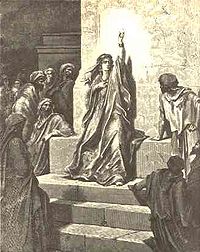
Judge and Prophetess Deborah (1,200 -- 1,124 BC; Book of Judges) by Gustave Dore (Public Domain)
In Pennsylvania the judges are elected and appointed judges do not outperform elected judges and elected judges are more independent and take on a bigger work load according to a recent study that is contrary to the elitists' propaganda; the elitists want to take away this right in states that have an elected judiciary (it would also hurt African-Americans in areas that they would not have a black judge if they were appointed). Convicted felon George Soros, who has an international Arrest Warrant out for him issued by President Vladimir Putin of Russia on Jan. 24, 2012, has been trying to change the PA law to abolish elected judges for his own personal benefit through front groups such as Pennsylvanians for Modern Courts that is funded by Soros' Open Society Institute according to The New American; see article entitled: George Soros Buying Judges Now?--PD (Also, See Judges: Should they be Elected or Appointed?)
This is fascism and one element of fascism is elitism. Even former Freeholder and now Assemblyman Eric Peterson was also against the Sheriff because it could not be controlled. So should we have an oligarch in Hunterdon County and only the few are elected by the elite so they can control everything? Is there any respect for the Constitutional Officers and the U.S. Constitution in this county? See County Police vs. Elected Sheriff--PDF (a separate county police force is very expensive and a duplication of services--the Sheriff's Office is a county law enforcement office and is less expensive. It already exists).
Historical Note on Appointed Prosecutors: The Prosecutor is an appointed positon (the Governor appoints the prosecutor and the State Senator can recommend appointments and has the authority to approve or axe the Governor's appointment in his/her district--PA's District Attorneys are elected and is a better system). Hunterdon County finally has an honest prosecutor--Mr. Anthony P Kerns III (Dec. 3, 2010 to present) , who will not tolerate police misconduct such as pulling Hunterdon County residents over with no probable cause, racism, false charges, mistreatment, etc. (File a complaint with his Office if this type of police conduct has happened to you, which is a problem in Hunterdon County.) Mr. Kerns motto on his website is: "Injustice anywhere is a threat to justice everywhere" (Martin Luther King, Jr., Letter from Birmingham Jail, April 16, 1963). We have an honest prosecutor in Hunterdon County because of State Senator Mike Doherty (23rd District), who had to recommend and approve the appointment. Senator Doherty has very high standards and those standards include upholding the original intent of the Constitution, equal justice for all no matter what economic, ethnic or racial background the person comes from, integrity, compassion and equal justice for the poor and fatherless, and honesty.
The recent Del Val prosecutor--who is a muncipal prosecutor for the Joint Municipal Court of Delaware Valley that covers Alexandria, Frenchtown, Holland and Kingwood--stepped aside until the Hunterdon County Prosecutor finishes its on going investigation on allegations of ethics violations according to the Hunterdon County Democrat, May 31, 2012, page B-1, is really only the tip of the iceberg that is not being addressed in this county and other counties in NJ. Why are municipal prosecutors, cops, lawyers and judges seem to all be working together regardless if citizens rights are being violated? Is this just a big money making machinery? There are allegations by citizens being made that their defense lawyers and municipal prosecutors' will not go against the police even if they broke the law such as pulling over someone with no "probable cause" or are lying. Any case that involves illegal stops including DUIs (see Drunk Driving Enforcement is a Racket) should be thrown out if this occurred. And there are allegations being made that many Hunterdon County lawyers are afraid to take on the police for lying and misconduct. One citizen made the allegation that her lawyer told her not to put in a complaint to the Hunterdon County Prosecutor's Office against the police officer (no probable cause) and do not tell the judge this. There might be retribution. Just plead guilty! What a disgrace!
Hunterdon and Somerset counties have had horrible prosecutors (former Somerset Prosecutor Nicholas Bissell was indicted on 30 counts of criminal activity by a gran jury; the citizens could not remove him and he was there from 1982 to 1996--only the Governor could remove him; this is not the case with an elected Sheriff' who is accountable to the people). Hunterdon county has multiple million dollar lawsuits against it because of the former Prosecutor, whom some of the Freeholders would praise. Hunterdon County has never had a sitting Sheriff convicted of a crime relating to his/her Office! There were a few politically motivated bogus charges by a rogue prosecutor, but every one of the charges was dropped--yes, they were all vindicated. Also, we have had police departments not that many years ago in this county taken over by the prosecutor's Office because of misconduct. A case in point was the Clinton Twp. Police Department and Lambertville Police Department; just recently (2012) you had a Police Officer from Clinton Twp. Police Department arrested for illegal possesson of a drug and a Clinton Borough Police Officer charged with theft--this refutes a few of the Freeholders' supposition that appointments are better; the police chiefs are appointed. (To Freeholder Mennen's credit, he would approve mergers of police departments into the Sheriff's Office on a contractual basis between the Twp. and county. Freeholder Director Matt Holt has been an excellent supporter of using the Sheriff's Office and wanting to consolidate DPS into the Sheriff's Office. We need more Freeholders like Matt Holt.)
Fair School Funding (FSF)--Do you want to reduce your school property taxes by millions of dollars? Then support the Fair School Funding proposal by Senator Mike Doherty.
Video (Senator Doherty sworn into office, NJIAT copyright @ 11/23/09): NJ State Senator Mike Doherty (23rd District) is sworn into office on 11/23/09 at the Capitol. Pastor Andrew Paton, from the Clinton Church of the Nazarene, does the invocation for the Senator. Trump Rally in Ewing, NJ with Senator Mike Doherty (23rd) -- PDF
New Jersey Senator Mike Doherty's Opposition to Bill S-2173 (Vaccinations) -- (12/10/19)
State Senator Mike Doherty (23rd District) has recently drafted legislation that would give all students in New Jersey an equal amount of aid no matter where they reside in the state, not the current formula where 150 towns get back only 5 cents or less back on every dollar of their State income tax sent to Trenton. 20% of the students are receiving 60% of the educational funds—these towns receive $20, $30 or $40 back for every $1 sent to Trenton. The bill is consistent with the State Constitution, Article VIII, Section IV, Paragraph 2.
Let me give you a brief background history on how we arrived at 20% of the students in New Jersey receiving 60% of the school funding. The State Supreme court has violated the New Jersey State Constitution by disregarding the division of powers (Article III, Paragraph 1), ignoring that the funds are suppose to be equally divided to the students in New Jersey (equal benefit for all the people of the state, Article VIII, Section IV, Paragraph 2), and the State income tax that was enacted in 1976 that was supposed to be used for the express purpose of reducing taxes (Article VIII, Section I, Paragraph 7.a.).
How would Senator Doherty’s bill on Fair School Funding, an Act concerning State school aid and supplementing Title 18A of the New Jersey Statutes, lower property taxes in 80% of towns without reducing their school budget? See FSF Raritan/Flemington Powerpoint Presentation on 08-11-2011 by Senator Mike Doherty (23rd) -- PDF (Powerpoint converted to PDF in order to post to website).
Senator Doherty’s bill would create a new formula for the allocation of State aid to school districts. Each school district would receive aid based on the State aid per pupil rate and multiplying that amount by the school district’s enrollment for the budget year. In other words, the State Treasurer projects the total revenue amount from the State income tax for the budget year to determine the per pupil rate and then the Department of Education is to divide the amount according to resident enrollment of the school districts. This new formula in the bill will have the effect of bringing millions of dollars back into the school districts were property taxes can be reduced thousands of dollars without ever touching the school budget. For example, instead of Raritan Twp. /Flemington Borough getting only $5,611,128/$48,603,208 (12 cents for every dollar sent to Trenton) for school funding, they would get $21,522,459 and all of Hunterdon County would get an increase of about $130 million under the FSF plan.
Not everyone living in affluent areas such as Hunterdon County is wealthy. The current formula instituted by a rogue State Supreme court is wrong and legislature should just nullify/not enforce any unconstitutional rulings. The extra money going to the Abbott districts is wasted and there is a lot of fraud. (This bill would not affect the food program for lower income students administered by the Dept. of Agriculture.) The bill if approved by the Legislature would be an amendment that would have to be approved by the voters. Call Governor Chris Christie, Majority Leader Senator Steve Sweeney, and Minority Leader Senator Tom Kean, Jr. and tell them to support the bill if they are serious about reducing property taxes.
For further information, read the Fair School Funding Plan proposed by Senator Mike Doherty (23rd District) that would reduce property taxes by thousands of dollars per househould if passed by the New Jersey Legislature and signed by the Governor located at www.fairschoolfunding.com. (See below for a breakdown and explanation of your property tax bill.)
How to run for NJ School Board and counter the LGBTQ curriculum
Arise NJ -- After slashing education funding to school districts across the state, new unfunded mandates in education – like the LGBTQ curriculum – are being imposed by the state on New Jersey school districts and do not allow for parental opt-outs. Read more here: https://www.northjersey.com/story/news/education/2019/06/26/teaching-lgbtq-in-schools-can-nj-parents-opt-out/1549151001/ (And also see New Jersey Federation of Republican Women.)
New Jersey Senator Tom Kean, Jr. was misled in the Senate Session on 01/11/2021
 Senator Tom Kean, Jr. (21st District) did not understand what he said in the Senate Session on 01/11/2021--click NJ Senate Session - Monday, Jan. 11, 2021 (video--1:08 minutes). He made a statement that President Trump should resign (Kean fell for the propoganda). Watch Senator Mike Doherty (23rd District) speaking about what really happened (29 minutes into video) and setting the record straight and not supporting the asinine resolution and then listen to Senator Kean, Jr. (21st District) disgracing himself (1:08 minutes into video). Of course, you have many NJ Democratic Senators lying about President Trump not winning the election by a landslide such as Senator Richard J. Codey. See 2000 Mules by Dinesh D'Souza--it 100% proofs that President Donald Trump won the election in 2020. By the DVD at www.infowars.com (the store). 2000 Mules documentary by Dinesh D'Souza finally reveals PROOF that 2020 election was completely stolen from Trump (2022) -- this was actually how the election was stolen.
Historic Events of Senator Mike Doherty
 RNC 2016: Meet the N.J. lawmaker who has backed Donald Trump the longest (Senator Mike Doherty of NJ, 23rd District (07/18/16)
Stile from NorthJersey.com News: GOP More on the Fence than in Trump's Corner (07/19/16) -- the idiot Jon Bramnick (NJ Assemblyman, 21st District), who is not even a NJ Delegate, has not endorsed Trump yet. Bramnick sits on the floor of the NJ delegation and stood next to Governor Chris Christie's son (Andrew) and his son Andrew called in the NJ's 51 delegates at the RNC convention in Cleveland, Ohio, but cannot even endorse Trump. Someone please tell Bramnick to go the hell home. Another scumbag/Globalist, who wants to raise the NJ Gas Tax, in the Republican Party according to other NJ Republican delegates at the RNC convention. So, what does Governor Christie do? He praises Bramnick that cannot even endorse Trump. Governor Christie told his cronies not to cheer for Eric Trump (he was shunned by them), which was alleged by other NJ delegates? They have witnesses to confirm this happened. Also, Governor Christie does very little to help Lt. Governor Kim Guadagno -- it seems he ignores her and gives her no credit or praise.
Governor Chris Christie (NJ) delivered a great speech at the RNC convention; however, Russia is not our enemy (this was also stated on the Mike Savage show on 07/20/16). Governor Christie has to stop listening to his neocon, globalist, God hating friends. Russia is promoting Christians values, freedom, fighting against Islamic terrorism and harmful GMOs, etc. President Putin is a great man. Unlike America which is taking our freedoms away (see Twitter Execs won't Say If they Believe in Freedom of Speech at the RNC Convention (07/21/16)) -- many Conservative/Populist/Libertarian radio hosts including Fox News are trying to be shut down or censored; see CSJW Coup Going Down at Fox News (07/20/16) -- There apppears to be a coup going down at Fox News seeking to oust Roger Ailes). This is what the Globalists such as Hillary Clinton are behind.
Senator Mike Doherty Opposes the New Jersey Gas Tax (2016)
NJ Gas Tax increase is a Joke and Senator Mike Doherty (23rd District) speaks out (2016) -- It is a joke to raise the gas tax and then lower the Estate Tax--it is a shell game. Even Senator Steve Oroho (24th District), who supported the gas tax (he paid $400,000 of his own money for his senate bid & receives construction union money--nothing wrong if it is promoting something honest) got the raw end of the stick from Governor Christie on Thursday where the bill is stalled; Senator Oroho got some of his proposals removed or not supported that were in this bill from the Governor according to sources. There is no valid reason for any gas increase, especially since they want to lower the Estate Tax (3% of the population would benefit)--the whole thing is a scam and only Wall Street would benefit with refinancing. The Republicans and Democrats supporting the increase of the NJ gas tax are stupid. Former Assemblywoman Donna Simon (16th District) lost the election because she listened to the nonsense of Assemblyman Jack Ciattrelli (16th District) not to speak out against the gas tax. Senator Mike Doherty (23rd District)--see Senator Doherty, Assemblyman DiMaio and Assemblyman Peterson protesting the gas tax -- they have been vocal opponents of this increase of the NJ gas tax -- it is a shell game and will hurt the middle class and poor. Note: This is a pro-union site; however, the push by construction unions to raise the NJ gas tax is dishonest. Also, all State, county, local government, Police employees (maybe with the exception of the State Police and the Railroad pension), etc. should have one pension (PERS)--PFRS was started in in 1944, but was very restricted (many LEOs had to stay in PERS because of age). They can have a tier system so if you want to retire earlier, you can have a higher deduction amount from your pay check.
Lebanon Borough Rejects County Wide School System discussed at several Mayors' meetings hosted by Rob Walton in 2010 & Municipal & School Budgets -- Where does Most of the Money go to on your Tax Bill? Also, see a chart with a Budget Breakdown of a Typical Township (Raritan Twp.) and how consolidating all schools in the county will most likely not result in any change in your property tax bill;
The are three things that will save money for the townships in Hunterdon County: 1. Township Police departments merging into the Sheriff's Office on a contractual basis (the twps. would still in effect have control on how many men from the existing police dept. would patrol their Twp.; they would just be wearing a Sheriff's uniform)--this does not apply to townships who already use the services of the State Police (just keep using them); 2. The Fair School Funding proposal by Senator Mike Doherty (see above--Hunterdon County would get back $130 million); and 3. Merge the Hunterdon County Department of Public Safety (DPS) into the Sheriff's Office. (For further information, see What can Hunterdon County Freeholder do through Shared Services using the Sheriff's Office above.)
For mergers into the Sheriff's Office, there needs to be at least 3 townships willing to do this in order to set up a 24/7 operation. There is one township and mayor who wants to use the Sheriff's Office--he just needs two more townships to get on board. If anyone is interested, just e-mail this site and we will forward information to a person who has already prepared a summary for using the Sheriff's Office.
School Budgets
The school budgets (Hunterdon Central High School and Flemington-Raritan Schools) are not controlled by the townships or voted on except if the budget goes beyond the 2% cap--then the Twp. has to vote on the school budget. This was not case before New Jersey legislature recently changed the law that included moving the date of elections for board members to November. Changing the election date was a good thing, but denying the Twp. committeee to vote on the budget was a bad thing. Also, there are many loopholes in the 2% cap such as paying on bond debt, etc. So the school budget can increase more than the 2% per year--this is why the taxpayers can see an 8% increase in the budget.
Saving Taxpayers Money on the School Part of Tax Bill
Saving the taxpayers money on the school part of the tax bill is more challenging. Although merging school districts will save some money, you will not see any substantial reduction in your tax bill because eliminating a few Superintendants and Principals might save a million or more--this will be negligible on your tax bill. Why?
Because the budget is $104 million (between Hunterdon Central High School and the Flemington-Raritan Middle Schools--Flemington Boro and Raritan Twp. are already consolidated) for Raritan Twp. You will see very little decrease in your tax bill. This is not implying that some consolidation is not needed in the school system for efficiency (there should be one board of education for K-12 like other counties in NJ such as Mercer County (Hopewell Valley Regional School District, etc.), that is, not sperate middle school boards and a separate high school board when the students from the middle schools will attend the high school). However, a lot of the so-called consolidation proposal plans for all the high schools in the county to be consolidated coming out the Hunterdon County Freeholders Office has more to do with a power grab, not reducing costs--you will loose local control (one Board for the whole county). Freeholder Rob Walton already got caught with a misleading township police merger plan--police mergers should only occur through the Sheriff's Office (see Police/Sportsmen & Local Government Tabs for further details).
The solution: Implement Senator Mike Doherty's Fair School Funding legislation. Your tax bill would decrease thousands of dollars per household on your property taxes--no tax increase and no budget cuts. Some counties in PA implement a 1% or 2% school tax on earned income--do we need another tax? See Breakdown of Budget below.
Raritan Twps Budget and a Breakdown of were your Money is going
Raritan Twps budget is $17,183,051.95 (2014). The school budgets are around 104 million--the biggest item on a resident of Raritan Twp. tax bill is the middle schools( 6 schools for Raritan & Flemington Boro with a budget of $53,925,621 million for 2013-2014). Whereas the High School is the next largest cost item $51,489,154, but the cost is spread out amoung 5 townships. (see Hunterdon County's School Directory.) You also have the county budget, which is $88,787,312.03 (2014)--however, this cost is allocated amoung the 26 municipalities in Hunterdon County. So it is the lowest part of your tax bill--however, the same allocation method would not be used for the consolidation of schools, but by population of students per township as the current method of the Middle Schools and High Schools.
| Category | Budgets |
Raritan Twp. Tax Bill |
Cost allocation--# of Twps. |
| Category 1 | $ 17,183,051.00 | Raritan Twp |
1 |
| Category 2 | $ 53,925,621.00 | Flemington-Raritan Middle Schools |
2 |
| Category 3 | $ 51,489,154.00 | Hunterdon Central High School |
5 |
| Category 4 | $ 88,787,312.00 | Hunterdon County |
26 |
| Total | $ 211,385,138.00 |
Do not Merge Twp. Police Departments or Townships. You have the Sheriff's Office
It is totally unnecessary to merge townships or police departments when you have the Sheriff's Office. Shared Services can be offerred through the Sheriff's Office. It is stupidy to merge police departments and then the county would have to take them over. If you want to merge police departments, then merge them into an existing county police force called the Sheriff's Office. This is a Civil Rights issue, a cost issue, duplication of services issue and local soverignty issue. You can elect the Sheriff.
How is Agenda 21 being implemented on a local government level?

U.N. Agenda 21 encourages cities to take land rights away from private owners. Photo credits: Austin skyline by jrandallc / Flickr, U.N. background by Nicolas Raymond / Flickr
Democrats Against U.N. Agenda 21

(To find out if your local municipality, town or city is implementing Local Agenda 21, see Local Governments for Sustainability (ICLEI)--click "Members" on top bar menu and then on the left side column click on "Global Members". After you click, click, click you will be redirected to a webpage of all the local government "global members" of ICLEI, listed in alphabetical order by country;The Forced Depopulation of America's Rural Area--Agenda 21 and Forced Indigenous Population out of Rural Areas. & The Smoking Gun: The Direct Link between Agenda 21 and Local Planners & Rockefellers Fund "Sustainable" Plot & Friends of Green Readington (located in Hunterdon County, NJ) is an example of Agenda 21 being implemented on a local level--PDF
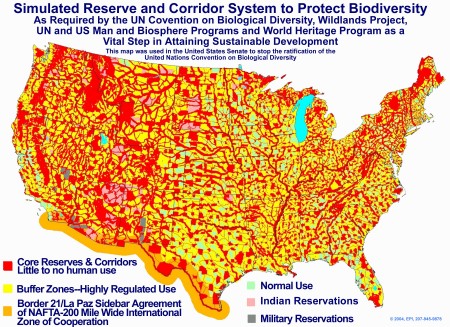
Agenda 21: The BLM Land Grabbing Endgame (2014)
Video: Agenda 21=Death (U.N.'s urban plannng program turns the population into mere serfs who are easily controlled by the government (07/01/14)) -- Signed in 1992 by multiple nations, including the United States, the United Nations Agenda 21 Sustainable Development program is an urban planning “action plan” which calls for government to eventually take control of all land use without leaving any decision making in the hands of private property owners.
Against "Agenda 21"-- Tom DeWesse stated in an interview at CPAC in Washington, D.C. 2011 on how destructive this United Nations program is on local governments and how it is being implemented on a local municipal level; for example, the International Council for Local Environmental Initiatives (ICLEI)--see video interview at www.libertynewsnetwork.tv. and What are the UN's Agenda 21 and ICLEI? The UN's Agenda 21 is being implemented by Non-governmental organizations (NGO's) with a political agenda and go by such names as Sustainable Developement, Smart Growth, Historic Preservation, Open Space, etc. (it is enforced by non-elected boards and is a blueprint to turn you community into a little Soviet Union--see American Policy Center.) If Agenda 21 is fully implemented, it will eventually terminate your right to own property--the United Nations' Universal Declaration of Human Rights does not recognize property rights. Local officials should withdraw from ICLEI and your State Representatives and State Senators should cease funding and oppose all measures for sustainable growth. Montgomery County commissioners in Pennsylvania on March of 2011 let its membership in the ICLEI lapse--residents accussed the commissioners with being in league with the U.N. to promote global warming, a lie being told to the public.States banning Agenda 21: Arizona has bill to ban UN Agenda 21 and Tennessee passes resolution banning UN Agenda 21. Ocean County in NJ on Feb. 15, 2012 passed a resolution against Agenda 21--see copy of resolution. Also, read about what some of the communists on Readington Township Committee tried to do to Solberg Airport, located at 39 Thor Solberg Road, Whitehouse Station, NJ 08889, through eminent domain (see www.solbergairport.com).
Open Space and Farm Land Preservation
Image credit: Moses (1391-1271 BC) with the Ten Commandments by Rembrandt (Public Domain)
Most of the funds for open space or farm land preservation go to the politically connected for property that would have never been developed or for land that is worthless ( taxpayers pay top dollar for the land even it is swamp land). The taxpayers cannot even use the land they paid for. If the taxpayers want to preserve land, then the Twp. should own the land and the taxpayers should be able to use the land for recreational use such as dirt bike riding. (There are State laws that would have to be changed in order to allow for this).
See the examples below of politically connected persons in Raritan Twp. receiving open space or farm land preservation funds:
4. Mr. Charles Crown (who passed away in 2008 and served in the Army in Vietnam and was an employee of Raritan Twp. Road Department in Flemington, NJ) wrote a letter on May 27, 1998 that made allegations about a land purchase by Raritan Twp. from Renay Solomon and Erich Development, Inc.--see Letter from Mr. Charles Crown (May 27, 1998)--PDF that was widely distributed in Hunterdon County, especially Raritan Twp. and Flemington.
Note: Marcia Karrow was the Mayor of Raritan Twp. in 1998 and campaigned for Committeman Tom Antosiewicz and Committeman Oliver Elbert--see Flyer for 09/13/08 Campaign Fund Raiser for Tom Antosiewicz & Oliver Elbert and who supported them--PDF). Tom and Oliver also campaigned for Marcia Karrow for the 2009 Republican Primary battle for State Senate and supported an anti-gun resolution on March 2013. Raritan Twp. Committemen Antosiewicz and Elbert also support the radical environmental movement such as Global Warming and Agenda 21 that is against private property ownership. The UN's Agenda 21 is being implemented by Non-governmental organizations (NGO's) with a political agenda and go by such names as Sustainable Developement, Smart Growth, Historic Preservation, Open Space, etc. (it is enforced by non-elected boards and is a blueprint to turn you community into a little Soviet Union--see American Policy Center.) Russia in the 21st century under President Vladimir Putin has been increasing freedoms for its citizens, economic propsperity and promoting family values while the U.S. and EU are taking away freedoms and becoming Fascist like Nazi Germany.
Questions about Open Space purchases by Raritan Twp.
County of Hunterdon
Board of Chosen Freeholders
Agenda June 17th, 2014 (Raritan Twp. Committeeman Oliver Elbert attended the meeting)
V1. Farmland Preservation/Open Space: Sue Dziamara
01. Resolution:
Approving a Cooperative Assistance Grant application upon the recommendation of the Open Space Advisory Committee with New Jersey's Conservation Foundation on Block 43, Lot 3, in Raritan Township. Estimated 45 acres known as the Kangas Acquisition in the amount of $84,907.50.
02. Resolution ;
Approving a Non-Profit Grant Application upon the recommendation of the Open Space Advisory Committee with D&R Greenway,on Block 43, Lot 3, in Raritan Township. Estimated 45 acres known as the Kangas Acquisition in the amount of $56,605.00.
Block 43, Lot 3, in Raritan Township. An estimated 45 acres known as the Kangas Acquisition through two sources of funding provided by the county through two separate grant applications for Raritan Township in the amount of $141,512.50.
The property's history going back 30 years: Anthony DeSapio and Alexandria DeSapio conveyed the property to Theodore Kangas and Laurel Kangas on May 4th, 1984 for $159,900. Theodore Kangas, the husband, conveyed all of his rights, title and interest in the property to his wife, Laurel Kangas, pursuant to a final judgement of divorce on April 9th, 1991.
Questions: 1. Where is Raritan Twp's plan for "Open Space/Farmland Preservation"?; 2. Does Raritan Twp. have one? Is it in writing?; 3. What percentage of "Open Space" remains in Raritan Twp. versus what has already been developed?; 4. What percentage of the land does Raritan Twp. want to preserve as a community before moving it into a "Stewardship Program?"; 5. Where is Raritan's Twp. plan for "Augmenting the Townships's Budget"?; 6. Are there "Appraisals" for the property being purchased? The public has a right under New Jersey's "Freedom of Information Act" to obtain the appraisals.; 7. Has any Raritan Twp. committee members ever seen the "Appraisals"?; 8. Are the Raritan Twp. committee members just taking preliminary numbers given to them by the County and State at face value?; 9. What are the qualifications of the members serving on the "Open Space Advisory Board" at the county and municipal levels, especially when it comes to determining criteria and statutory requirement for acquiring land under the "Open Space/Farmland Preservation" programs?; 10. Has Raritan Twp. ever questioned the "Unelected Officials" at the State level to ascertain whether crops can be grown on properties being considered? Who does the soil testing? What is their background?; 11. See New Jersey's Open Space Preservation Programs: A Review of County Grants Under the Farmland Preservation Program--A Program Review for Attorney General John J. Farmer, Jr. by The Office of the Inspector General.
The High Cost of our Hunterdon County Attorney--Freeholders Will Mennen, Matt Holt and former Freeholder Ron Sworen take action to save Hunterdon County Taxpayers Thousands of Dollars in Legal Fees

The Hunterdon County attorney not only received $845, 286.86 in fees for services rendered in 2008 (the total amount of money paid for services rendered in 2009 was $1,237,709.78 [over a million dollars] ), but he also gets a $62,328.00 salary from the county with health care benefits and a pension (see copy of 1099 for Guy Desapio's Hunterdon County Legal Fees in 2008--PDF & Salary and Health Benefits and the Hunterdon County Freeholders who Voted to Renew Guy's Contract in 06/17/08—PDF & Letter from Interim Chief Financial Officer of Hunterdon County dated 12/06/13 verifying $1,237,709.78 paid to Guy DeSapio for services rendered in 2009--PDF). They can hire either one or two full-time salaried attorneys and a paralegal for $300,000. Guy DeSapio finally retired as county counsel after 30 years in 2011 (I hope he did not let the door hit him in the "Ass" when he retired).
A Hunterdon County Republican Committee member in Raritan Twp. intially requested a 1099 form on July 24, 2009 for Mr. Guy DeSapio under the Open Public Records Act (OPRA) and wrote an article in the Hunterdon County Democrat [see Letter to Editor (08/13/09, Pg. C-8) titled: Add Attorneys to the County Payroll] about the excessive legal fees being incurred and offered a solution. His efforts got the ball rolling for DeSapio's removal. Freeholder Will Mennen, Freeholder Matt Holt and former Freeholder Ron Sworen should be complimented for their initiative to appoint Tom Borkowski, CPA and Attorney in 2010 to the Legal Services Advisory Panel to study the high legal fees incurred in the county and recommended in-house legal counsel resulting in over $700,000 in savings ($1,237,709.78 was spent on legal fees in 2009 under county attorney Guy DeSapio and once Guy was removed and an in-house counsel was implemented the cost of legal fees for the county in 2012 was only $360,000). Of course, the exact recommendation was made by a Republican County Committee member in 2009--see the Letter to Editor (08/13/09) article in the Democrat above. They made the recommendations and all Freeholders (except one Freeholder) voted to implement the change by removing Guy DeSapio through retirement and hired a full-time county attorney saving the taxpayers thousands of dollars.
Mr. Henry Kuhl, GOP Chairman since 1970, Challenged by Mr. Guy DeSapio for Hunterdon County Republican Chairmanship (06/12/12)--an attempted Coup d'Etat by some of Henry's so-called Friends

Mr. Guy DeSapio challenged Mr. Henry Kuhl (who has over 60 patents to his credit) for the Hunterdon County Republican Party Chairman on June 12, 2012 and lost. Dick Zimmer (a libral lobbyist according to Dr. Murray Sabrin), who supports partial-birth abortion and voted for an assualt rifle ban in a major crime bill under President Clinton according to On the Issues (his son thinks that man evolved from an animal; this is a major disagreement with Yahweh who stated in the Book of Genesis that man was made in the image of God--see the Scientific American Blog), nominated Mr. Guy DeSapio and the other Rockefeller/Fascist Republicans were dealt another loss--the whole entourage of officers (Chris Yates, 1st Vice Chair, Mayor Gabe Plumer, 2nd Vice Chair, Holly Locandro, Secretary, except for William Meglaughlin, Treasurer--who stayed loyal to Henry) that were under Mr. Henry Kuhl jumped ship and went with Mr. Guy DeSapio on the slate and now they are out on their sorry Asses.
Allegations were being made by county committee persons that the real reason for the challenge was to try to take away the line from State Senator Mike Doherty (23 District)--the Rockefeller/Fascist Republicans do not want honest, God fearing and constitutional State Senators and Assemblymen. There was also an anonymous letter sent to Hunterdon County Republican committee persons and other public and law enforcement officials alleging criminal activity with many of our Rockefeller/Fascist Republicans behind the coup d'etat to try to take Mr. Henry Kuhl out. There was also a second letter sent by a County Committee person. There are also allegations that the opposing group to Henry tried to make a behind the scenes deal with Assemblyman John DiMaio (23rd) and he refused to go against Senator Mike Doherty and Assemblyman Erik Peterson. Republican insiders allege that Assemblyman Erik Peterson does not seem to take a public stand on anything unless it benefits him-- he has to be pressured to do the right thing. One retired law enforcement Hunterdon County Republican Committee person stated regarding the anonymous letter, "The letter was a real "Ass" slapper and I think that a lot of the allegations made might be true."
Many Hunterdon County Republican Committee members are pleased with the newly elected slate of officers under Mr. Henry Kuhl (William Bischoff, 1st Vice Chair, Stephanie Pierce, 2d Vice Chair, William Meglaughlin, Treasurer and Frank White, Secretary)--they have outstanding credentials and actually stand for true Republican values such as honesty, integrity, loyalty, righteousness, etc.
Note: There are allegations made that Macia A. Karrow, who was mentioned in the anonymous letter, was going to run for Chairman of the Hunterdon County Republican party against long time friend Mr. Henry Kuhl, but was told by the Governor's Office not to run. Marcia A. Karrow is Executive Director of the New Jersey Meadowlands Commission. Marcia A. Karrow was an appointed State Senator by a special election made up of Republican County Committee Members from Hunterdon and Warren counties on 01/24/09 when Congressman Leonard Lance (who was the sitting State Senator in the 23rd District from 01/08/02 through 01/03/09) won the Congressional seat in the 7th District and vacated his State Senate seat (Ms. Karrow was never elected by the people for the position) and then she was defeated in a hotley contested Republican Senate primary that occured in June of 2009 by State Senator Mike Doherty (23rd District).
It should also be mentioned that Mr. Charles Crown (who passed away in 2008 and served in the Army and was an employee of Raritan Twp. Road Department in Flemington, NJ) wrote a letter on May 27, 1998 that made allegations about a land purchase by Raritan Twp. from Renay Solomon and Erich Development, Inc.--see Letter from Mr. Charles Crown (May 27, 1998)--PDF that was widely distributed in Hunterdon County, especially Raritan Twp. and Flemington.
Hunterdon County Freeholders go After Low Paying Court Custodians
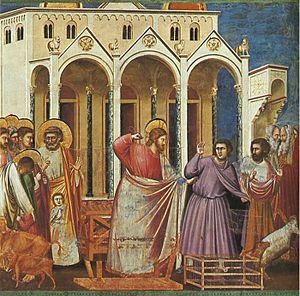
Image credit: Christ kicks out the money changers from the temple by Giottio di Bondone (1266-1337). Public Domain.
Protestant Martin Luther (1483-1546) taught (from the Bible) that all labor, not just the labor of monks and nuns, could be done to the glory of God--Capitalism is no longer practiced in the U.S. Our economic policies are semi-Fascist/Corporatism? We live in a Neo-Feudalist system were the super rich hold $32 trillion in offshore banks. There is nothing wrong with wealth if it was obtained honestly and the wealthy are not hoarding --see Luke 12:16-21 & Proverbs 28:27. Also, see The Reformation Roots of Western Cilvilasation and Cilvilisation and the Protestan Reformation and TV commentary on Billionaire Scammer Warren Buffett and the Banker Bailout--4/14/2012.
It is a disgrace that the Hunterdon County Freeholders are willing to lay people off ( freeholders eliminated 18 jobs, including 15 low paying custodial jobs that were outsourced to save an estimated $600,000--however, the two-year contract will cost $539,867 granted to "All Clean Building Services" , which is located in Mercer County (not even a Hunterdon County company). Only the elite can get benefits. You will see nothing in your tax bill on a 91 million dollar budget. The average custodians were making $29,000 per year and their jobs were outsourced so the company can make the profits and pay their people $5 an hour. Instead of consolidating the DPS under the Sheriff's Office and saving the townships money by offering services though the Sheriff's Office, they lay off the custodians. They have no compassion for people--there is no reason to outsource these jobs. This is typical Fascist ideology--certain jobs are considered menial, but the Protestant Reformation stated that all work has dignity before God--yes, the Bible is very clear on this issue. Also, the custodians have families to support. They (the Freeholders) will receive severe judgement by the Supreme Ruler of the Universe by oppressing the wage earner. “Look! The wages that you kept back from the workers who harvested your fields are shouting out against you, and the cries of the reapers have reached the ears of the Lord of the Heavenly Armies. You have lived in luxury for the day of slaughter. You have condemned and murdered the one who is righteous, even though he did not resist you.” (James 5:4-6, ISV.) (See article titled "18 County Employees Losing their Jobs in Hunterdon Democrat dated Jan. 19, 2011.)
The Hunterdon County Freeholders extended the intial cleaning contract for the county buildings until Feb. 28, 2014 for an additional $269,934 and they voted for another extension for the same price on Tuesday (01/14/14) for a total amount of $1,079,734. Numerous county employees have complained about the quality of the cleaning service such as Pia Rey Doklan, who works for the Division of Senior, Disabilities and Veterans Services, who was at the Freeholder's meeting on Tuesday (01/14/14). There was no reason to contract out the cleaning service and pay this amount of money when the county had low cost custodians (a staff of 15) working for the county until the Freeholders decided to terminate them on Feb. 2011 and give their jobs to an outside firm. (See Hunterdon County Democrat, Jan. 16, 2014, page A-3, articled entitled Freeholders keep Cleaning company.)
What happend to the Polytech proposal in Hunterdon County?
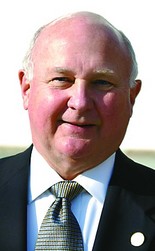
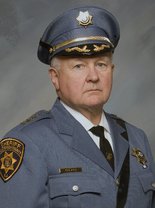

In 2001, former Freeholder and Undersheriff George Muller of Hunterdon County proposed purchasing the Yale property--which is across from the Hunterdon Central High School Field House--in order to house the Polytech students instead of leasing the building on Bartles Corner Road. The cost to purchase said property with state grant and bond financing would have been less expensive per year ($400,000) than the annual cost of $500,000 to lease a building for Polytech. This would have given the Hunterdon Central students free parking and courses without leaving the campus. The Raritan Valley Community College (RVCC) would have also leased Yale property space from the county and there were other government agencies looking to lease. The building would have been paid off in less than 20 years and generated an income. Unfortnately, Freeholder George Melick and former Freeholder Marcia Karrow voted against the Yale property purchase. The Freeholders needed four votes because it was a bond issue. See the 04/10/01 Yale Property Proposal--PDF.)
(Instead of leasing space at the Bartles Corner Road for $500,000 per annum, this money should go towards expanding the current Polytech building on the Hunterdon Central High School campus and expand the parking. Maybe add a second story to the building--it should be of high quality, not shoddy.)
10 Million Dollar Lawsuit Filed against Hunterdon County because of the Stupidity and Alleged Misconduct of a Few Hunterdon County Freeholders and Former Prosecutor
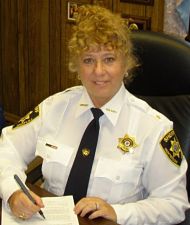
There is a 57-page 10 million dollar lawsuit filed against the current and former Hunterdon County Freeholders, County Administrator, Cynthia Yard, former Prosecutor J. Patrick Barnes, former county attorney Guy DeSapio, former Assistant Prosecutors Bennett Barlyn and William McGovern, Prosecutor's employees Kenneth Rowe and Edward DeFillipis and others by former Sheriff Deborah Trout, former Undersheriff Michael Russo and former Sheriff's Investigator John Falat, Jr.--it was filed in Hudson County on August 2, 2012. The claimant's allege that they suffered an "ongoing patttern and practice of violation of state and federal laws" against them as a result of former prosecutor J. Barnes bogus investigation and subsequent indictment on 43 counts that was dismissed by the Attorney General's Office, which the State Superior Court Judge in Somerville rightfully granted the motion in August of 2010. Yes, all the charges were dismissed!
It should be noted that you have a few Freeholders such as Freeholder George Melick who did not like the Sheriff's Office--however, he might have a different perspective given that he is a fiscal conservative and sees the cost savings using the Sheriff's Office. The Sheriff's Office and the other Constitutional Offices (County Clerk, Sheriff and Surrogate are elected Constitutional Offices and all 3 people serving in those positions have an impeccable record and high character) were given a hard time, especially the Sheriffs, over the last 30 years (this has started to change in a positive way). Assemblywoman Donna Simon is also mentioned in the lawsuit--she was the one that started the "Out with Trout" petition--she listened to the wrong people. However, Assemblywoman Donna Simon does see the cost savings by using the Sheriff's Office (an existing county police force) and would support using the Sheriff's Office for Twp. Police consolidations or just to use the Sheriff's Office to supplement Twp. police departments to offset costs according to a County Republican Committee member. Assemblywoman Donna Simon has to be complimented on her excellent voting record in the NJ Assembly since she has been in office (01/30/12). It is despicable how the Freeholders mistreated, harrassed , trashed and slandered former Sheriff Deborah Trout. No reason for this kind of conduct.
There are a few Republican County Committee members asking for an investigation by the Attorney General's Office of the Hunterdon County Freeholders to determine if they pressured or conspired with the former prosecutor J. Barnes to go after former Sheriff Trout or any other perceived elected officials that they consider their enemies. See article entitled Former Sheriff Sues Hunterdon County for Defamation, Wrongful Prosecution and More by the Hunterdon County Democrat (08/23/12)
A. Hunterdon County (2013) may have another Lawsuit (a Civil Rights issue) over an alleged Illegal 37- page Job Application--this time involving an applicant for a position in the Division of Communications , which is under Department of Public Safety (DPS)--George Wagner is Director of DPS. It is time for the DPS to be under the Sheriff's Office and say goodbye to George Wagner and his Freeholder buddy Rob Walton. Sheriff Fred Brown would not discriminate or mistreat his people underneath him. The functions belong under the Sheriff's Office.
There are allegations circulating in Hunterdon County that an applicant for a position at the Hunterdon County Communications Division of Communications had her Civil Rights violated by an illegal job application--questions that are illegal according to the applicant who spoke with the NJ Division of Civil Rights. According to the applicant (that will remains nameless until the official lawsuite is filed) who alleges that the county attorney (Shana Taylor--a nice woman) had to revise the application, but then the training was started while she was told to wait. Most counties might have at most a 7-page application.
Why are our Elected State Officials, especially in the 16th District, Fixiated on Eliminating Tenure for Teachers? How is this going to Save Taxpayers Money or Improve Test Scores? That can be Done to improve our Education System? What about the New Jersey Core Curriculum Content Standard (item#X)? Is this the Common Core Curriculum? Why is the Flemington-Raritan School District and many other schools in NJ adopting this curriculum that is dumbing-down the students? (See ADHD/No to Ritalin and Whole Health tabs about legal exemptions for students from dangerous vaccinations.)
 Image credit: By David Dees. Deeillustration.com
Tenure for Teachers is not the Problem
Eliminating tenure for NJ public school teachers will not save the taxpayers any money. It also will not improve test scores. A representative of NJIAT was speaking to a teacher in the Somerset County area and he told the representative that the top students are Chinese and Indian students--they are very disciplined and have the same teachers as the white and miniority students. (The music department is filled with Chinese students.) On the other hand, many white students and minority students are very undisciplined and the only thing they are concerned about is using their cell phones to text, watching pornography, being disrespectful and fornicating. (This is also the case at Hunterdon Central High School according to one of the long time teachers there--the students are lazy, disrespectful and spoiled; the students were not like this years ago.) Obviously, there are other factors to consider such as ability, upbringing and education of the parents--everyone is made in the image of God, but not everyone is created equal. Some people have more talents and higher IQ's--this does not imply that a person that has less talents is less valuable as a human being. (Also, Pharmaceutical drugs and vaccinations given to our children dumbs them down--see the ADHD/No to RitalinTab.) A secular humanist would look at the person's utilitarian worth (like Nazi Germany)--this could explain why the Hunterdon County Freeholders laid off low wage custodians. This is why Bill Spadea, a nice guy, and other party members pushing for eliminating tenure is stupid and is a straw man argument to avoid dealing with the real issues. They think this is a start--a start for what? Brains! The parents do not discipline their children--the white and miniority families are usually from divorced parents or their parents were never married and this plays a large part in low academic performance. Dumbing down our students is covered below. This is a God problem--yes, no fear of God.
 Saving Taxpayers Money and How to Solve the Low Test Scores
The are a few things that will save taxpayers money and solve the problem with low test scores: 1. The Fair School Funding proposed by Senator Mike Doherty (www.fairschoolfunding.com). 2. Merging twp.police departments into the Sheriff's Office (an existing county law enforcement department) or supplementing the twp. police departments using the Sheriff's Office thereby allowing a reduction in their force (throught attrition) and saving thousands of dollars. 3. Promote marriage, a creation ordinance (between a man and women--see the Book of Genesis) that involves teaching children that God determines right and wrong. 4. Parents should be encouraged to discipline their children [the Supreme Ruler of the Universe does not allow the State to interfere with discipline of the child (using the rod)--we are not talking about abuse]. 5. Do not allow the medical establishment or pharmaceutical companies to be pushing dangerous antidepressant drugs and vaccines on our childern (see the ADHD/No to Ritalin Tab and the Whole Health Tab).

And Stop Common Core in Your State (reject "Race to the Top"--dumbing down English & Math standards) & Transforming America's Schools into Authoritarian Instruments of Compliance and obtain a brochure to hand out to parents & teachers titled Common Core: A Scheme to Rewrite Education.
See the following articles on "Common Core":
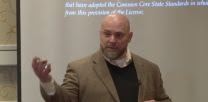
2. Common Core Inflicts Anguish on 7-year-old Girl --see video of the Illinois Curriculum Director giving a teacher conference on Common Core math. She explains children can say that “3 x 4 = 11″so long as they can explain how they came to that conclusion;
3. FreedomProject--Christian values & Founding Father Principles --citizens against Common Core have united a powerful coalition of libertarians, conservatives, Republicans, Democrats, Tea Party activists, progressives, liberals, parents, teachers, experts, and more;
4. 100-Year-Old Math Teacher Shreds Common Core (12/09/14) -- A 100-year-old teacher has seen a lot in the classroom.
5. Bill Gates Loves Common Core for your kids, BUT NOT HIS (03/23/14);
6. Common Core Teacher: Kids 'Not Comfortable' With 9+6 (09/05/14)--TV host on lession: 'That's not math. That's 'The Silence of the Lambs!' See the TV commentary;
7. Steve Jobs Didn't Let His Kids Use IPADS (09/15/14)--The double standard is clear when one considers the actions of billionaires, such as former Microsoft CEO Bill Gates, whose foundation has invested millions of dollars pushing the Common Core curriculum onto public schools, but who opts to send his own children to private academies where the Common Core standard is not taught.
Excerpt from Dr. Duke Pesta on deviate sex acts children will be taught under Common Core:
Children are taught holding hands, hugging, kissing, is the same as every other deviate sex acts—they are taught there is a sameness to “all” sex—there is no such thing as normal sex in Common Core, wide open sex of every weird type is taught to be acceptable in Common Core. Pornography is no longer looked down upon in the Common Core curriculum. Very young students can’t even comprehend those teachings and understand that if someone does something to their little bodies, that they were told about in the Common Core sex curriculum, that it is wrong and shouldn’t be done to them.
Teen Screen
In reference to item#5 above, TeenScreen, which is similar to health screening tests like the Youth Risk Behavior Surveillance System (YRBS), is illegal unless the parent gives permission. It would be a violation of the Protection of Pupil Rights Amendment (PPRA), a federal law intended on protecting the rights of parents. The YRBS and TeenScreen is meant to identify suicidal tendencies and social disorders--it has been labeled by the Alliance for Human Research Protection as a "duo-drug promotion scam" that declares "otherwise normal children to be mentally ill." This is why there is an increase in children being medicated with antidepressants depsite FDA warnings about suicidal behavor. Of course, the pharmaceutical companies are making big profits off of drugging your kids.
What can be Done to Improve our Education System?
It is not the public school teachers per se that is the problem, it is the system that needs to be changed. See the following articles below on what is happening to the school system.
- Dumbing Down America by Charlotte Thomas Iserbyt--she worked as a senior policy advisor in the Office of Educational Research and Improvement at the Department of Education during the Reagan years and was fired when she exposed what was really happening.
- How the Education System in the U.S. is Deliberately Dumbed-Down--PDF
- 22 Unanswered Questions About Everyday Math - PDF
- Welcome to New York City Hold National
- Your Guide To Understanding Education in ILLINOIS
- Mathematically Correct
- Common Core Standards and the elimination of parental and local authority (that was founded & funded by Bill Gates and supported by the Board of Governors and large corporations).
- Will Common Core Standards Solve the Reading Problem?
Our elected offcials can make sure that systematic phonics, cursive writing, basic arithmatic, foreign languages and true American History and the Constitution is being taught--this should start in primary school. And that whole language and everyday math is not allowed to be taught in our public schools. The homosexual agenda should not be taught in the public school system under the guise of "tolerance" and stop the undermining of students' religious belief by promoting the religion of "secular humanism", which is moral relativism (no absolute right or wrong). In 1961, the U.S. Supreme Court cited Secular Humanism as a religion--see Torcaso vs. Watchins (367 U.S. 488).
What about the State’s Authority over a Citizen and our Children?
 Image credit: By David Dees. Deesillustration.com
In reference to item# 4 above, the Supreme Ruler of the Universe as stated in the Scriptures recognize four (4) sovereign spheres of authority
A summary extracted from The Encyclopedia of Practical Christianity, page 504 and A Christian Student's Survival Guide (the chapter entitled A Biblical Political Science, page 212), by Dr. Robert A. Morey about the State’s authority over citizens:
- All authority resides in God (Dan. 4:28-37; Matt. 28-18).
- All human authority is delegated authority, which means God will hold the person or institution accountable to Him for how they used their authority (Rev. 20:11-5).
- No person or institution has absolute or intrinsic authority by God (John 19:10-11).
- God’s delegated authority is only valid to leaders according to Scriptural guidelines and functions within Scriptural limits.
- The Scriptures recognize four (4) sovereign spheres of authority
- Church (1Thess. 5:12-13; Heb. 13:17, 24 etc.)
- State (Rom. 13:1-7; 1 Pet. 2:13-17 etc.)
- Family (Eph. 5:22-29; Eph. 6:1-4, etc.)
- Business (Eph. 6:5-9; 1 Pet. 2:18-19, etc.)
Listen elected officials. When you go into an unauthorized sphere, you are going against the Supreme Ruler of the Universe--the State has delegated and limited authority by God in Scripture (Rom. 13:1-7). Instead of the Republican and Democratic NJ State legislators promoting homosexual judges, who want to oppress and discriminate against God fearing people, and supporting homosexual marriages, let them promote righteousness instead. The NJ State legislators are bringing judgement on themselves and the people of New Jersey. See What is Wrong with our American Kids? and the Militant Lifestyle Tab.
Why many Holocaust Survivors accuse Former President Franklin D. Roosevelt as being an anti-semite? & Why Gun Grabbers are Holocaust Deniers & A Few on the Raritan Twp. Committee voted for an Anti-2nd Amendment Resolution that failed. (See testimony from Holocaust Survivor Jack Zaifman at Hunterdon Central High School on 03/26/14.)

Gun Grabbers are Holocaust Deniers & Yes, Hitler and Stalin Did Take Guns--see Video and Article
Death by Gun Control--see chart of governments that committed genocide against its own people in the 20th century--PDF and FirePower and Faithand Citizens in Arms: The Swiss Experience and Why Nazis Germany would not invade them--PDF and the JPFO
Many Jewish Holocaust survivors accuse President Franklin D. Roosevelt as being an anti-semite because when the Jews were fleeing the death chambers in Germany toward the borders of America, it was Roosevelt who forced them back to their destruction and he also ignored their plight and even helped Hitler do it. One surviving Holocaust survivor in NJ stated that many liberal Jews in America are clueless about Roosevelt (or do not want to hear the truth) and what was the true Worldview of Hitler and the Nazis--see the following two articles entitled Liberals are Clueless & Lawlessness or Armed Citizens.
Raritan Twp. and Security at Hunterdon Central High School
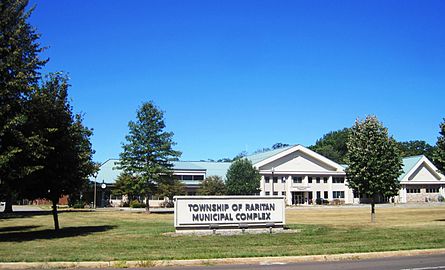
Image: Raritan Twp. Municipal Complex
Also, Raritan Twp. wants to assign (2013) a Raritan Twp. Police Officer as security at Hunterdon Central High School that will cost the taxpayers $80,000--the Sheriff's Office can have a Sheriff's Officer there for half the cost and they have jurisdiction for the whole county. Raritan Twp. will vote on Aug. 18 and the Board of Education will vote on Aug. 19 for proposed plan. Voice your opposition to this plan and their fiscal irresponsibility. Stupidity on the highest level. You have more of a chance on being hit with lightning than having a school shooting--Hunterdon Central already has a retired State Police Officer and other security resource officers already there. Many students are not happy with having a Rartian Twp. Officer there. (See articles entitled A Sheriff's Officer should be posted at Hunterdon Central High School (The HC News--08/06/13) & Sheriff's Office Should be used at Schools (Hunterdon County Democrat--08/12/13) written by a resident in Flemington--also, see Protecting Our Students and Teachers--POST.) Note: The recent Administrator in 2019 and a few of Raritan Twp. Committeemen wanted the schools to use the Sheriff's Office, however, you have a few brainless Hunterdon Country Commissioners who are refusing the service to the schools.
Anti-Second Amendment Resolution Voted for in Raritan Twp.
Raritan Twp. (Hunterdon County) committeemen (our fearless leaders) take an anti-gun position via a resolution that failed. Tom Antosiewicz and Oliver Elbert voted "yes" for an anti-gun resolution and Craig O'Brain and Mayor Michael Mangin voted "no", but Mangin makes a stupid statement about PA (PA residents go thru the same background check via the National Criminal Background Check System (NICS) started in 1988 and operated by the FBI as NJ residents when purchasing a firearm); however, Craig O'Brian and Mayor Michael Mangin should be complimented for voting "No"--see article entitled Raritan Twp. Committee Press for Tighter Gun Control dated 03/06/13.
The articles above and below are recommended for some of the misinformed or stupid people that showed up at Raritan Twp. and other townships in NJ voicing their hatred towards the Second Amendment. NJ should have gun laws like Texas, Florida and Pennsylvania. A criminal will not obey the law. A case in point is the Newtown shooting case. Adam Lanza stole the guns from his own mother (there are many unanswered questions surrounding this shooting--horrible security)--see video entitled Arkansas Arms Teachers In Schools; Hiding and Locking Doors "Is Not a Plan".
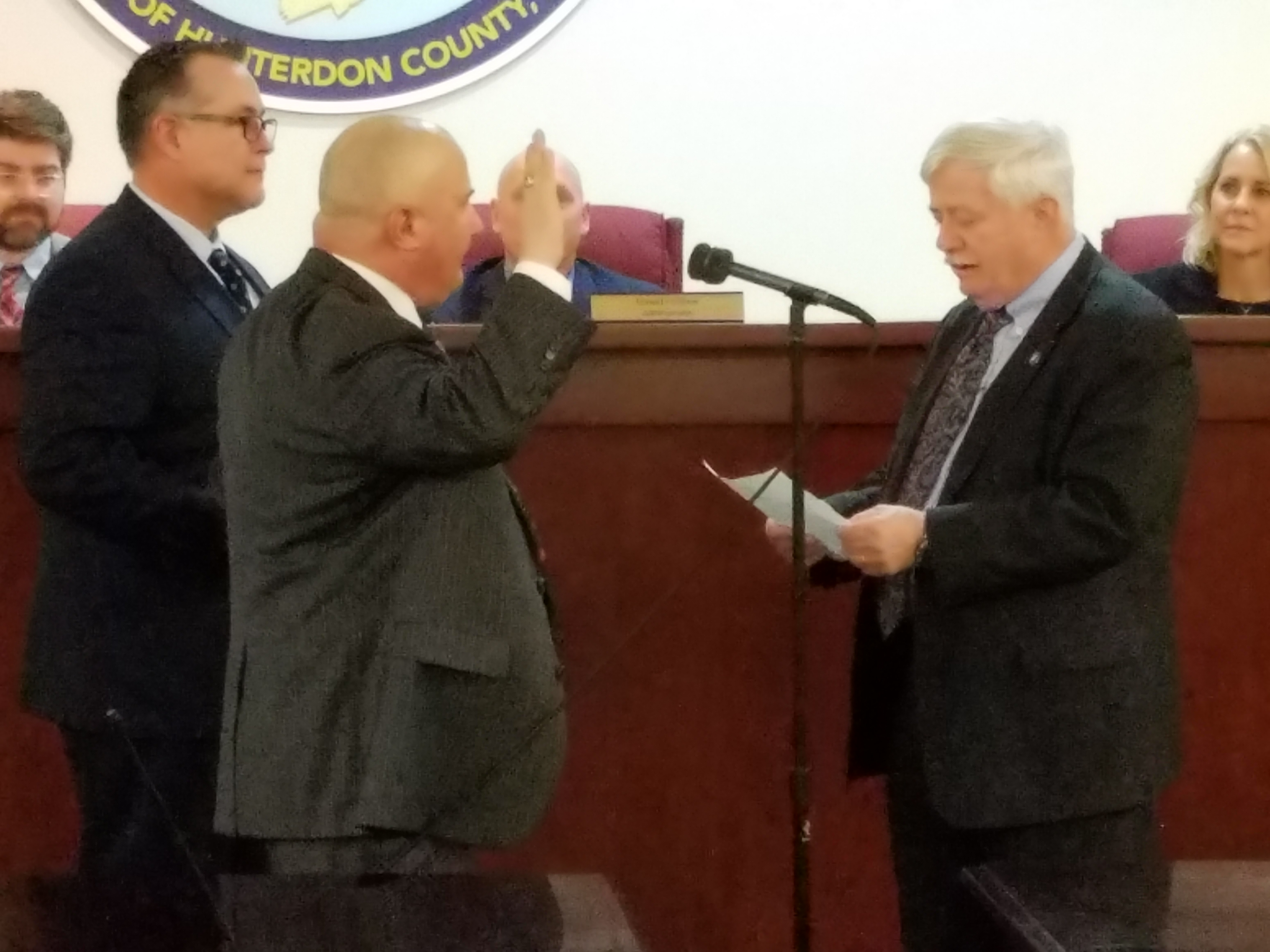
Left picture: Lou Reiner gets sworn in by Hunterdon County Sheriff Fred Brown for a second term as a Raritan Twp. Committeeman (Jan. 4, 2018). Gary Hazard was also sworn in. Mike Mangin was sworn in as Mayor for 2018. Picture (01/02/2015) of the Swearing-in of Lou Reiner by Senator Mike Doherty- PDF & Picture (01/04/2018) below of the Swearing-in of Lou Reiner by Sheriff Fred Brown - PDF
Raritan Twp Meeting on October 01, 2019 (Radical Liberal Democrats Protest Against Deputy Mayor Lou Reiner) -- Click Memorial & Obituary of Lou Reiner (11/12/2022), Death: ALS
The protest against Deputy Mayor of Raritan Twp. Lou Reiner was orchestrated by anti-God, left-wing radical Democrats. The Democrats care less about Muslims. Lou Reiner has a good relationship with the Muslims and only condemned on Facebook the radical Muslims committing terrorist acts, not all Muslims. The radical Democrats tried to misrepresent Lou Reiner because he was not specific on Facebook about the comment he made. Most Muslims hate what the radical left-wing Democrats and RINOs' worldview (anti-God) and their constant battle to force this agenda down everyone's face such as gay marriage, homosexuality, abortion, LGBTQ agenda, transgenderism, child sex, etc. This is an abomination to the Muslim community and Bible believing Christians and conservatives. No reason for former Committeewoman Karen Gilbert to make such derogatory remarks about Lou Reiner--everyone saw right through her. Note: There were no Muslims at the Raritan Twp. Meeting. Maybe one or two. The majority of the audience were left-wing Democrats (secular humanists, who are God-haters) that did not even understand that Islam is a religion, not a race or nationality! Yes, God-haters.
Raritan Twp Minutes October 01, 2019 -- PDF
Raritan Twp. Regular Meeting on 10/01/2019

Committeeman Lou Reiner of Raritan Twp. and Tom Smith II interviewed on News12 NJ on Jan. 19th, 2017, who both atttended the inauguration of President Donald Trump. A group of friends and their wives met in Washington, D.C. that all had tickets for the event (see pictures above). See Inauguration Ticket - PDF. Trump vs. Clinton (2016) Bulletin Presidential Voter Guide - PDF and Trump vs. Clinton (2016) Presidential Voter Guide - PDF.
News12 NJ Video: Raritan Twp. Councilman to attend inauguration (01/19/17)
Note: Of course, many of the topics discussed by Mr. Smith were not reported on News12 NJ. For example, the Free Trade agreeements such as TPP, Common Core, Vaccinations, etc. that President Trump was against. No mention of the non-profit who put the voter guide out.
Recommended Book
See Sheriff Mack’s website below for further information.
www.sheriffmack.com
https://www.sheriffmack.com/
Are you ready to take back these United States of America?
We can show you how. Did you know . . .
- The President cannot tell your County Sheriff what to do;
- Congress cannot tell your County Sheriff what to do;
- The Supreme Court cannot tell your County Sheriff what to do;
- Your County Sheriff takes an oath to uphold the Constitution of the United States of America.
Recommended Book
When is It Right to Fight? by Dr. Robert A. Morey can be purchased at Xulonpress.com
|